

Industries
Animal Health
Car Wash
Food Safety
Irrigation
Hemp
Nutrient Delivery System
Water Treatment
Metal Processing
Printing
Products
D07
Hobby Cultivator
D128
D25
DM11 (Diaphragm)
D14
D6
D40
D20
D132
D400
Carts
Installation-Ready Systems
Venturi
Discontinued Products

Inline chlorination offers a practical, affordable, and highly scalable method for disinfecting contaminated water without relying on electricity, complex infrastructure, or continuous operator supervision. 

This approach provides reliable protection to maintain residual chlorine levels throughout storage and distribution. It helps to prevent recontamination and guaranty safer water at the point of use. 

What Is Inline Chlorination system?

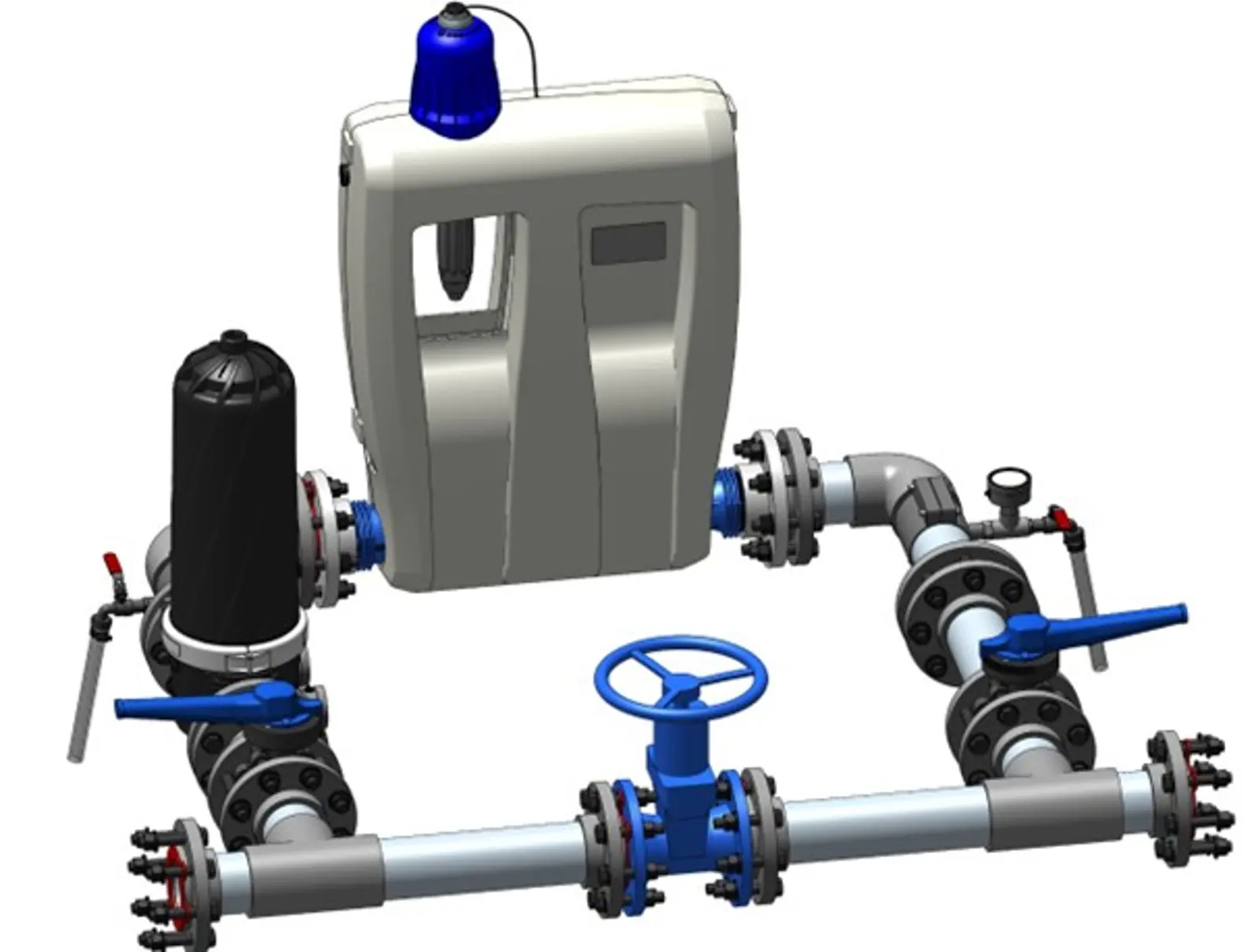
An inline chlorination system doses chlorine from a solution tank directly into the flowing water line. 

Such piston pump type relies solely on hydraulic power; the system can operate even in remote area or off‑grid environments. 

Inline chlorination effectively eliminates harmful pathogens such as E. coli, a major contributor to unsafe drinking water worldwide. 

The use of liquid chlorine enables rapid disinfection while creating a protective residual chlorine that persists. 

Liquid chlorine, household bleach should be diluted and stored on a retention tank to avoid any contamination in case of tank leakages. 

Distribution pipes and water storage containers are fully protected by residual chlorine.
water-treatment-system-picture1.jpg

Designed for Real‑World Water Systems

Inline chlorination systems are engineered to integrate water treatment skids found in rural and peri‑urban areas. These settings often face fluctuating water flow, intermittent pumping schedules, and limited technical capacity. 

Chlorination system fits effectively within: 

  • Gravity‑fed pipeline networks
  • Boreholes with variable or intermittent pumping
  • Multi‑tap community standpipes
  • Small to medium pipe distribution systems even with inconsistent flow rates

Thanks to their simple hydraulic design, these systems keep consistent dosing even when water pressure or flow conditions change. This makes inline chlorination one of the most resilient disinfection options to avoid water problems where power supply is unreliable 

Why Choose Dosatron for Inline Liquid Chlorination?

With decades of implementation in diverse environments around the world, Dosatron offers one of the most reliable and efficient product ranges for water treatment. Its injectors are recognized for precision, durability and long‑term robustness, making them an ideal choice for community and municipal water systems operating under challenging conditions. 

Powered Entirely by Water

Dosatron injectors work using a unique water‑driven proportional mechanism. As water flows through the device, the system automatically adjusts the chlorine dosage in real time from the dilution tank, ensuring precise disinfection. 

This eliminates common risks such as under‑chlorination which leaves users exposed to waterborne pathogens—or over‑chlorination, which is critical. 

Compared with tablet‑based or Venturi systems, Dosatron injectors offer significant advantages: 

  • No dependency on tablet quality, size, or dissolution behavior
  • No sensitivity to pressure variations or temperature variations
  • No need for electricity, sensors, or electronic controllers
  • And precision

The result is a stable and reliable chlorine concentration that meets drinking‑water safety standards day after day. 

Strong Supply‑Chain Resilience

Dosatron systems use liquid chlorine as disinfectant that is affordable, widely available, and easy to procure rather than specialized chlorine tablets or cartridges. In many remote or low‑income regions, these consumables often experience supply shortages, long delivery times, and high purchasing costs. 

By using liquid chlorine, Dosatron helps to avoid: 

  • Procurement challenges
  • Extended lead times
  • Risk of stockouts
  • High costs linked to specialized consumables

This supply‑chain flexibility makes the system a dependable long‑term option for public and community‑managed water systems. 

Compatible with a Wide Range of Hydraulic Conditions

Dosatron injectors operate efficiently across a broad hydraulic spectrum, allowing them to adapt to the realities of rural and peri‑urban water networks. They perform well under: 

  • Low or fluctuating flow rates (range from 10 l until 360M3/h)
  • Intermittent pumping cycles
  • Gradual network expansion
  • Various installation locations within existing pipelines
  • Behind solar submersible pump

This polyvalence enables water providers and NGOs to deploy Dosatron units quickly. 

The Dosatron dosing pump can be installed directly into existing infrastructure and can be adjusted later when needed if water demand increases. 

Lowest Cost per Volume Treated

When evaluating total lifecycle costs across different chlorination options, Dosatron consistently delivers one of the lowest costs per cubic meter of treated water. This Cost‑effectiveness is driven by: 

  • Efficient, proportional dosing mechanisms
  • Long‑lasting components requiring minimal maintenance
  • Affordable, widely accessible chlorine supplies
  • Elimination of electrical and electronic maintenance cost and logistic

For small and medium‑scale water systems with limited budgets, these savings provide meaningful and sustainable economic benefits. 

A Ready‑to‑Deploy Solution for Safe Drinking Water

Dosatron offers robust and field‑proven technology built to operate effectively where: 

  • Water quality is inconsistent
  • Infrastructure is limited or aging
  • Communities rely on dependable and safe drinking‑water sources
  • With its combination of precise dosing, strong operational resilience, low cost of ownership.

Dosatron stands out as one of the most effective chlorination system, solutions, for underserved regions.