
Cannabis Zinc Deficiency: Symptoms, Causes & How to Fix It
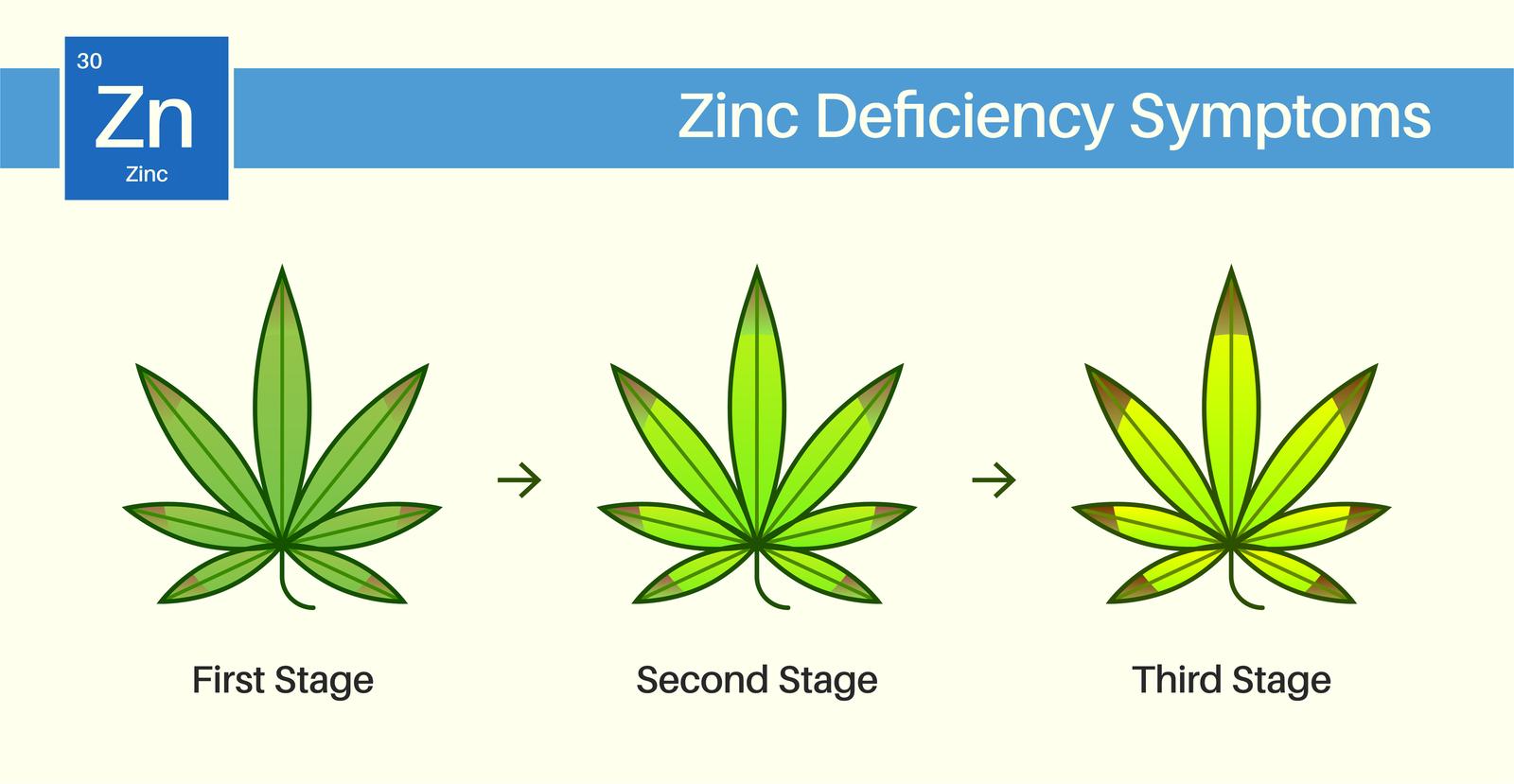
How to recognize zinc deficiency
Zinc has limited mobility, so symptoms show up mainly on new growth.
- Yellowing between the veins of young leaves.
- Small, narrow new leaves that may twist or wrinkle.
- Very short internodes, so new growth clusters together in a rosette.
- Leaf tips that turn brown or burnt-looking.
- In flower, buds that develop poorly or twist.
Tip: the combination of small, distorted new leaves and tightly bunched growth is the clearest sign of zinc deficiency. Iron and manganese deficiencies yellow new leaves without that stunted rosette shape.
Common causes
How to fix zinc deficiency in cannabis
- Check and correct pH at input and runoff (or in the reservoir).
- Review your bloom booster: lower phosphorus if it is excessive.
- Use a complete micronutrient mix or a chelated zinc supplement at label rates.
- Keep root zones warm and well-drained.
- Watch new growth: distorted leaves won't return to normal, but new growth should normalize within one to two weeks.
Don't overcorrect
Zinc is needed in very small amounts, and excess is toxic. Too much zinc can induce iron deficiency and damage roots. Always dose micronutrients precisely and follow label rates.
Deficiency at a glance
| Zinc deficiency |
Mobility | Limited — new growth first |
Key signs | Yellowing between veins on young leaves, small twisted leaves, short internodes |
Main causes | High pH, excess phosphorus |
Ideal pH | Soil 6.0–6.5, hydro/coco 5.5–6.2 |
Common mix-up | Iron or manganese deficiency, pH fluctuation |
How Dosatron helps
New growth, because zinc has limited mobility in the plant.
Reach out to us