
What Is The Best Soil For Growing Cannabis inside?
The best indoor cannabis soil drains well, carries the right nutrient load for your plant's current stage, and is easy for you to manage. For most growers that means a quality cannabis potting mix; for organic-minded growers, an amended super soil; for those wanting hydroponic-style control with soil-like simplicity, coco coir.
Growing indoors gives you complete control over the environment — and better yields and stronger plants follow from that control. While hydroponic systems are popular, many growers prefer soil: it's simple, natural, and produces flavourful, high-quality cannabis.
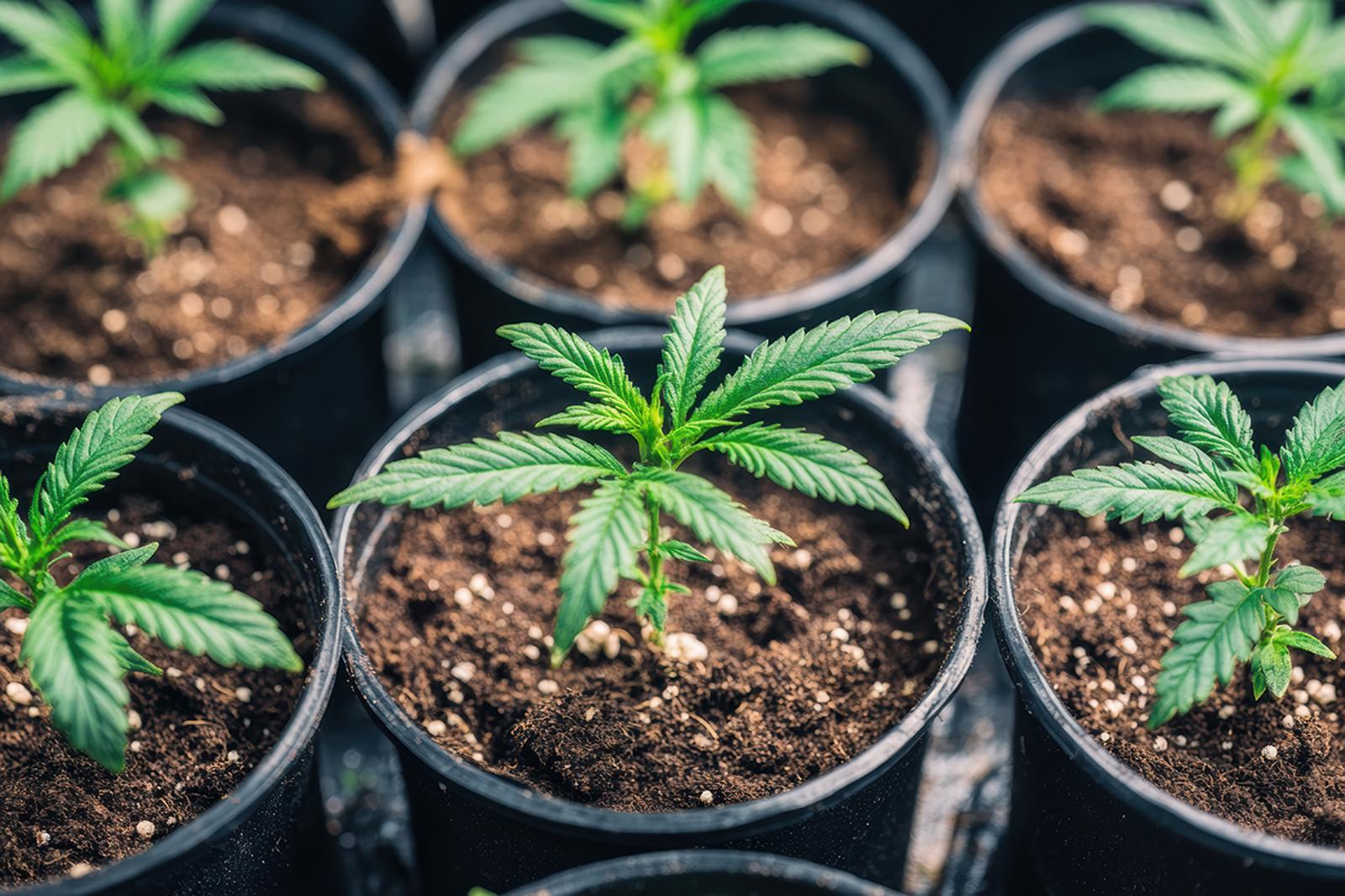
Compare your options at a glance
Medium | What's in it | Strengths | Trade-offs | Best for |
Potting mixes | Peat moss (moisture, root health), perlite or vermiculite (drainage, aeration), compost or worm castings (nutrients, beneficial microbes) | Convenient, balanced, widely available in cannabis-specific formulations | Less room to customise | Beginners — no guesswork on ratios |
Organic super soils | Bat guano, bone meal, fish meal, kelp meal | Nutrient-dense with beneficial microbes; slow-release feeding means no synthetic fertilizers needed | Must "cook" before planting so ingredients break down and nutrients become available | Growers wanting a fully natural approach |
Coco coir | Coconut husk fibre (technically not soil) | Excellent water retention, good aeration, neutral pH | Contains no nutrients — you supply everything | Growers wanting hydroponic flexibility with soil-like simplicity |
Compost-enriched soils | Soil blended with compost | Rich in organic matter; improves structure, water retention and nutrient supply | Variable composition batch to batch | Promoting healthy root growth and overall plant health |
Custom blends | Base (loam or coco coir) + aeration (perlite, pumice) + amendments (worm castings, guano, kelp meal) | Fine-tune to specific strains or growth stages | Requires experience and testing | Experienced growe |
How to choose: 4 deciding factors
1. Growth stage — this is the biggest driver:
Stage | Soil requirement | Why |
Seedling | Light, fluffy, low in nutrients | Too much fertilizer harms young plants |
Vegetative | Nutrient-rich, higher nitrogen | Supports fast structural growth |
Flowering | Higher phosphorus and potassium | Drives bud development |
2. Strain preference — sativas generally prefer light, airy soil; indicas often perform better in denser, nutrient-rich soil. Check your strain's needs before you buy.
3. Ease of use — pre-mixed soils arrive ready to go with balanced nutrition and drainage. Super soils and custom blends reward experience with finer control over nutrient levels and texture.
4. Pest resistance — sterilize any homemade soil or compost before use to kill pests and pathogens. Commercial soils are usually sterilized already.
Preparing your soil
tep | What to do |
Sterilize | Homemade soil only — bake in the oven or steam it. |
Amend | Add organic or synthetic nutrients depending on what your base soil already provides. |
Hydrate | Moisten before planting, but avoid saturating — too wet causes drainage problems. |
Container | Use pots with drainage holes so water can't pool. |
Keeping soil healthy through the grow
- Loosen before planting. Break the soil up by hand so oxygen reaches the roots.
- Pre-moisten store-bought soil. Light watering before planting creates an even environment for seedlings and makes nutrients readily available.
- Watch for compaction. Compacted soil restricts root growth — mix in perlite, pumice or coco coir to restore structure and drainage.
- Rejuvenate reused soil. Between cycles, refresh with new amendments and beneficial microbes.
Cover cropping. More common outdoors, but some experienced indoor growers plant cover crops like clover or peas between cycles. They fix nitrogen, improve soil structure, prevent erosion, and add organic matter back into the soil to replenish nutrient levels.
Where a Dosatron pump changes things
Good soil sets the foundation — consistent feeding is what builds on it. Dosatron pumps mix nutrients into your irrigation water at the correct ratio automatically, working equally well in soil and hydroponic setups.
Benefit | What it means in practice |
Consistent | Plants receive the same concentration every watering — no deficiencies, stunted growth or nutrient burn from over- or underfeeding. |
Customizable ratios | Adjust the dose as plants move from low-nutrient seedling needs, to higher nitrogen in veg, to phosphorus and potassium in flower. |
Efficiency | Manual mixing is labour-intensive across many plants. Set your concentration once and the system handles mixing and distribution. |
Water conservation | Delivering nutrients straight to the roots reduces waste. |
7 mistakes to avoid
Mistake | Why it hurts | Do this instead |
Using garden soil | Too heavy, may carry pests or pathogens, compacts in containers and restricts roots | Use a quality potting mix or cannabis-specific soil |
Overwatering | Roots need oxygen; saturation causes root rot | Ensure the soil drains well and water less frequently |
Underwatering | Stress leads to stunted growth and reduced yields — watch for drooping leaves, dry soil, slow growth | Water consistently and thoroughly |
Over-fertilizing | Excess nutrients burn plants | Start low and increase gradually |
Ignoring pH | Plants can't absorb nutrients outside the right range | Test regularly and adjust |
Poor lighting | Perfect soil won't compensate for weak light | Use powerful full-spectrum lights at the correct height |
Compacted or exhausted soil | Restricts roots and starves plants mid-cycle | Aerate and re-amend between cycles |
Reach out to us