

Industries
Animal Health
Car Wash
Data Centers & Mission-Critical Cooling
Food Safety & Sanitation
Irrigation
Hemp
Mining & Aggregates
Nutrient Delivery System
Water Treatment
Metal Processing
Printing
Products
D07
Hobby Cultivator
D128
D25
DM11 (Diaphragm)
D14
D6
D40
D20
D132
D400
Carts
Installation-Ready Systems
Venturi
Discontinued Products

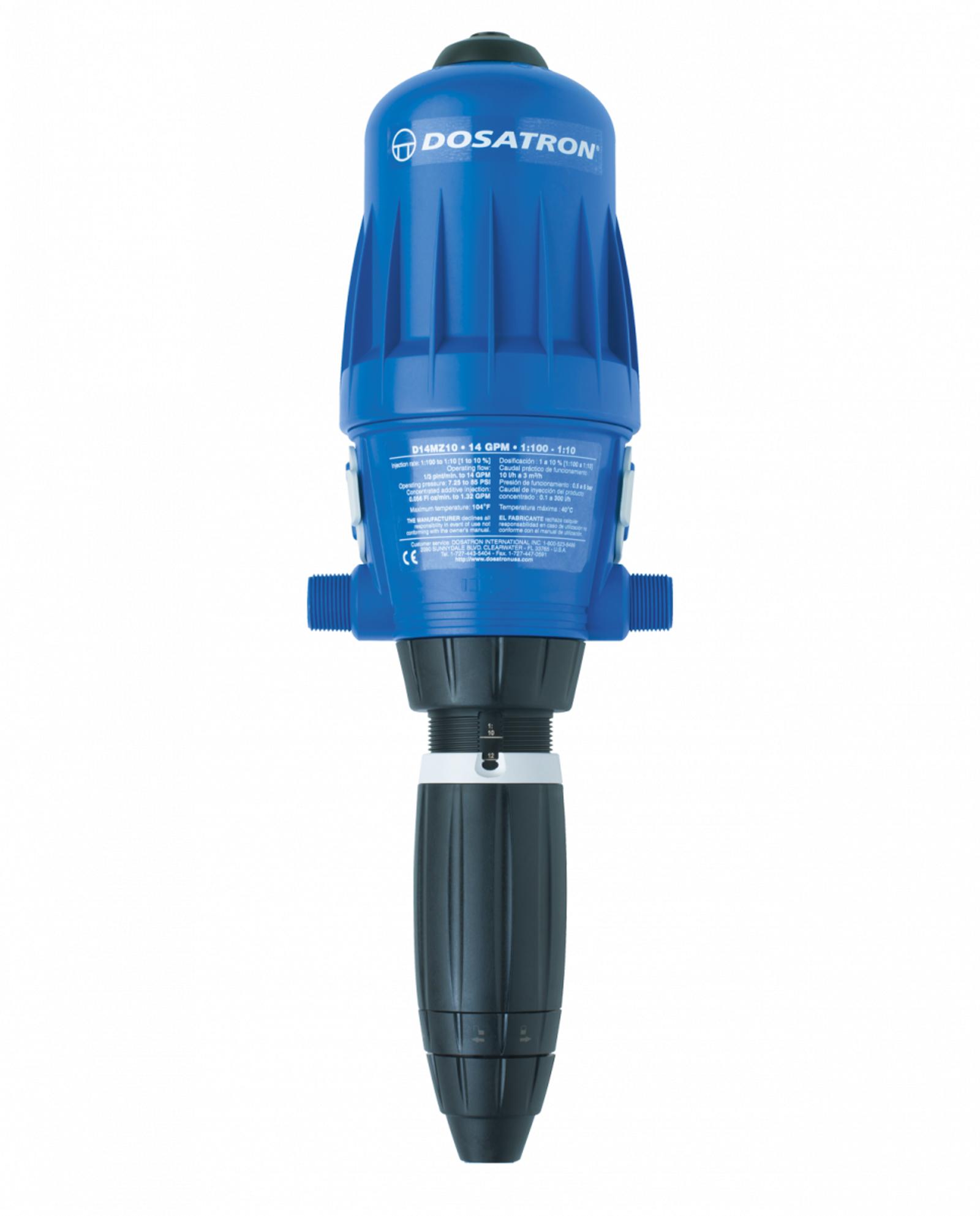
The workhorse of the Dosatron car-wash line — covering the vast majority of self-serve, in-bay automatic and tunnel arches.

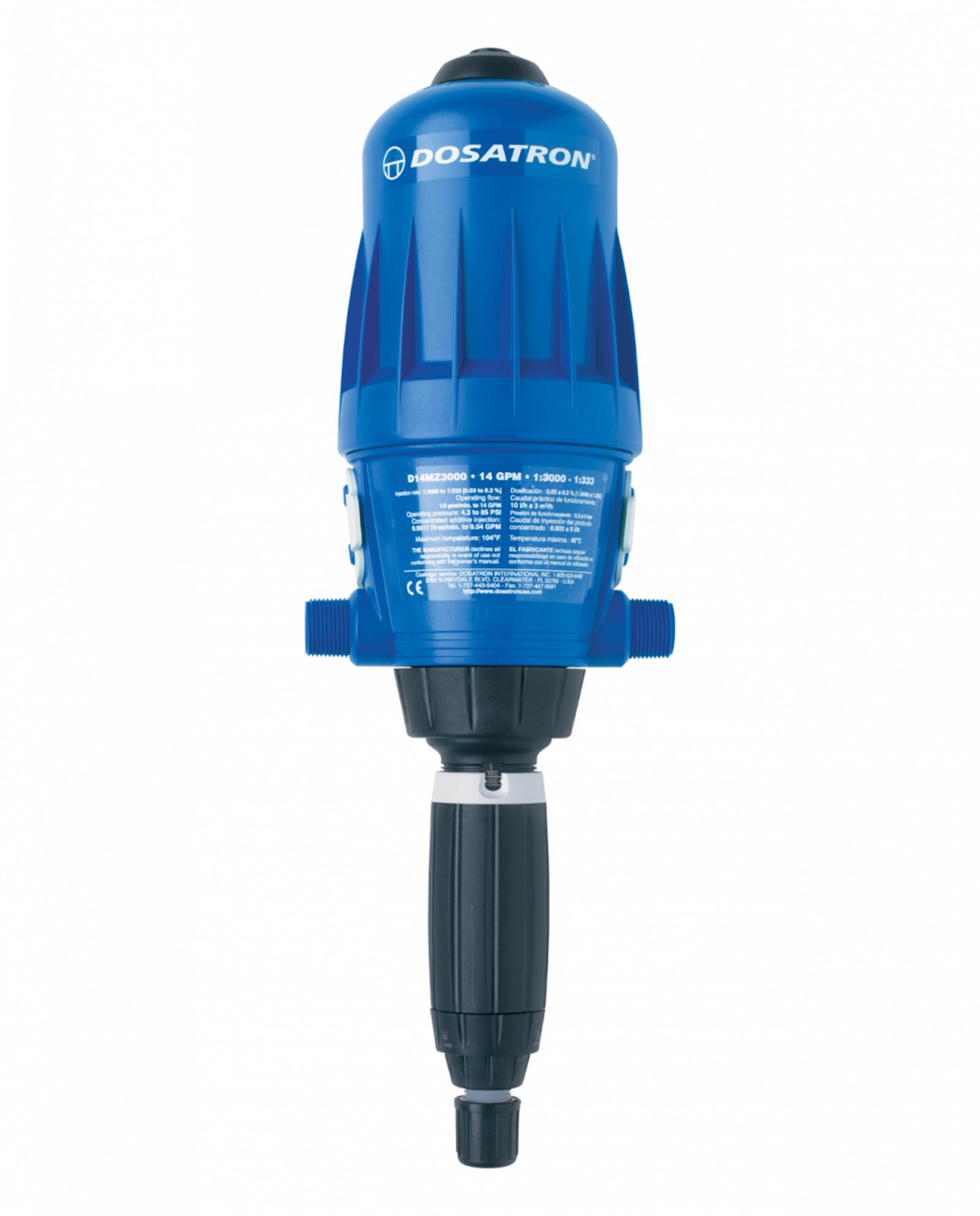
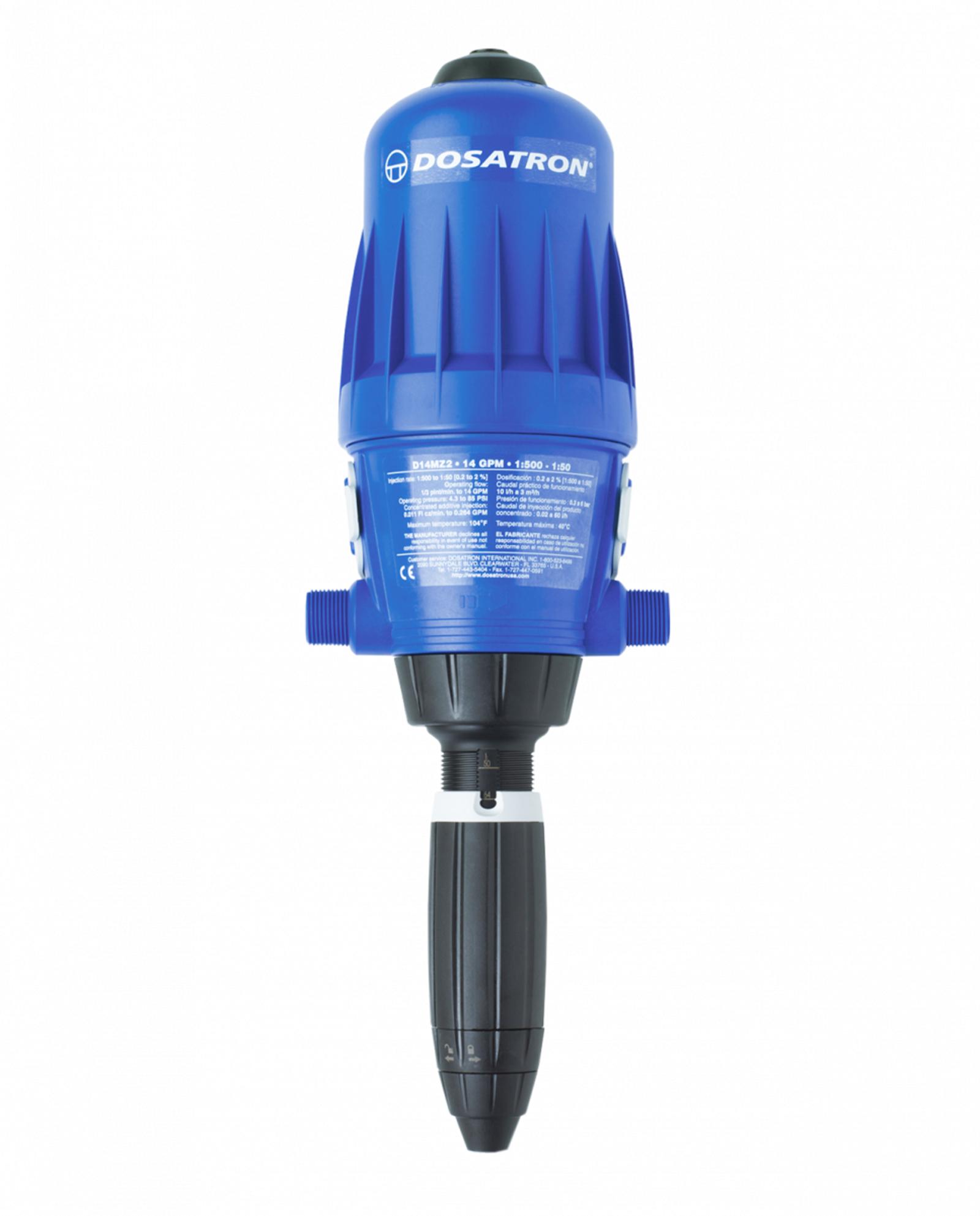
Every car through the bay is a chemistry problem: the right presoak, detergent, wax and drying agent, blended to the right ratio, at whatever flow and pressure the arch happens to see that second. Get it wrong and you either send out a streaky car or pour margin down the pit. The D14MZ-D solves that mechanically — a non-electric, positive-displacement proportional injector that meters a fixed percentage of concentrate into the water line and holds it as line pressure swings across the wash cycle. It's built for injecting presoaks, detergents, polishes, waxes, bug remover and drying agents in vehicle-wash applications — compensating for flow and pressure changes to deliver consistent, repeatable results;

Why Operators Standardize on Dosatron

  • Precision
    Repeatable ratio every car; no over- or under-application, no chemistry cross-talk further down the conveyor.
  • Efficiency
    Trim flow to the minimum that still covers the car; on a drying-agent arch that alone can halve both water and chemical per vehicle. 
  • Reliability
    Metal-free piston, corrosion-resistant across high or low pH; no electricity, so dispensers keep working off city pressure even if a booster pump fails. 
  • Set it and forget it
    No venturi tips, no "between tip sizes" frustration, no clogging; a large chemical well adjusts to what you need. Direct on-demand mixing eliminates mixed-chemical tanks and pumps.

Install Hydraulics — Design for the Head Loss

The injector imposes a flow-dependent pressure drop (the motive engine extracts work from the stream). Provide for it: verify the arch still receives its required nozzle pressure at design flow after the injector's ΔP. Recommended layout, upstream → downstream:

  1. Isolation valve → T-strainer (AKF5AP11T): 200 mesh / 80 µm, ¾″ FNPT — protects the dosing element from line debris that would score the piston.
  2. Pressure regulator (PR34-NPT): low-lead brass, set 3–4 psi below the lowest observed supply pressure to stabilize foam density and stop arch "spitting."
  3. D14MZ-D injector + check valve (CV34-PH): ¾″ one-way valve downstream prevents chemical backflow into the potable supply (a code requirement in most jurisdictions).
  4. Optional solenoid (SV034P-24-G): ¾″ chemical-resistant single-piece PP, 24 V or 120 V, for automated bay sequencing.
  5. Optional Dosa-Lock: locks the ratio stem so overnight staff can't "adjust" your margins.

"Keep suction lift under ~12 ft and the foot-valve strainer clean. Excess lift or a cold, viscous concentrate promotes cavitation of the dosing piston and downward ratio drift — locate the drum near the unit."

Jason MaddoxSales Manager | Car Wash expert

Commissioning Check — Verify the Ratio

After install, run a timed catch test: isolate the suction line into a graduated cylinder, pass a known water volume, and compute the actual dose Dact=Vconc/VwaterD_{act} = V_{conc} / V_{water}Dact=Vconc/Vwater — accept within ±5% of setpoint. Record the baseline for future preventive-maintenance comparison. 

For ongoing verification, the COM-100 EC meter and PH-200 pH meter (with calibration and storage solutions) confirm in-use strength, not just volume ratio