
in wealthier countries, most homes rely on municipal systems that filter, chlorinate and treat water before it ever reaches the kitchen sink, and many families add a reverse-osmosis or carbon polish for an extra layer of clarity. Yet even these systems are not immune to failure.

Every home deserves safe drinking water. For families on municipal supply, treatment happens upstream — but pipes age, mains break, and boil water advisories happen. For the millions of North American homes on private wells, cisterns or off-grid supplies, you are the treatment plant. In both cases, a residential chlorinator gives you a simple, dependable line of defense against bacteria, viruses, and biofilm.
The Dosatron D14WL is a water-powered, NSF 61 certified chlorinator designed exactly for this job. It installs on your main water line, runs without electricity, and delivers the exact same chlorine concentration to every gallon of water — from a single morning faucet to a full bathtub fill.
A Global Challenge, A Local Solution
How a Dosatron residential chlorinator works
The D14WL installs on your main water service, typically downstream of your well pump and pressure tank, and upstream of your sediment and carbon filtration.
As water flows toward your taps, the chlorinator draws a small, precisely measured volume of chlorine solution from a tank and injects it into the line. A retention tank (often a simple 80-gallon contact tank) gives the chlorine the contact time it needs to inactivate pathogens — the foundation of the CT value rule. A carbon filter on the outlet then removes residual chlorine taste and odor before the water reaches your taps.

When does a home need chlorination?
If any of the following apply to your home, chlorination is the safest, most cost-effective baseline of protection:
- Your home is on well water and a coliform or E. coli test came back positive
- Your well has iron bacteria, a sulfur (rotten egg) smell, or visible black/red biofilm in the toilet tank
- You live in an area subject to boil water advisories or hurricane-related outages
- You operate an off-grid cabin, hunting camp or seasonal property with stored water
- You want a continuous safety layer on top of your existing sediment and carbon filtration
- You're rebuilding after a flood, well-cap breach, or septic intrusion event
If you're currently dealing with a boil water advisory, head to our Boil Water Advisory chlorination guide for immediate emergency dosing ratios.
Typical residential setup — the 6-step layout
# | Component | Role |
1 | Well pump | Brings raw water from the well to the home |
2 | Pressure tank | Stabilizes pressure for the household |
3 | Dosatron D14WL + solution tank | Proportional chlorine injection on every flow event |
4 | Retention / contact tank | Provides CT-compliant contact time before consumption |
5 | Sediment filter | Removes particulates, including precipitated iron after oxidation |
6 | Activated carbon filter | Removes residual chlorine taste and odor before taps |
This layout is industry-standard for whole-home well-water disinfection. Your installer can adapt it to your specific plumbing, but the order matters: chlorine must contact the water before filtration, and the carbon filter must be the last stage, so it polishes the taste.
Choosing your dose
For continuous residential disinfection, a target free chlorine residual of 0.2 – 1.0 ppm at the kitchen tap is typical. For shock chlorination of a contaminated well, a single-event dose of 50 – 200 ppm is used and then flushed. Our Chlorine Dosing Calculator lets you input your target ppm, the strength of your sodium hypochlorite (typical household bleach is 5–6%; commercial NaOCl is 10–12.5%), the injection ratio and your stock tank size — and tells you exactly how much chlorine to add.
If you're unsure whether to use sodium hypochlorite (liquid bleach) or calcium hypochlorite (granular), our Sodium vs Calcium Hypochlorite guide explains when each is the better choice for a home system.
Why Dosatron for residential — Meet the D14WL
When it comes to protecting your family's drinking water, the Dosatron D14WL range delivers everything a residential chlorinator should. Powered entirely by your home's water pressure, the D14WL keeps dosing chlorine even during power outages, exactly when safe water matters most. Every wetted material is independently tested and certified to NSF 61 so you can trust every drop. Its proportional dosing technology keeps the chlorine concentration perfectly constant whether you're running a single morning faucet or filling a bathtub, with no over- or under-dosing. Maintenance is honest: one annual seal kit, twenty minutes, no proprietary tools — and that's it for the year. The D14WL is compatible with standard household bleach (sodium hypochlorite), so refills are as simple as a trip to the store, and the unit is self-priming up to 4 meters, meaning your solution tank can simply sit on the floor next to it.
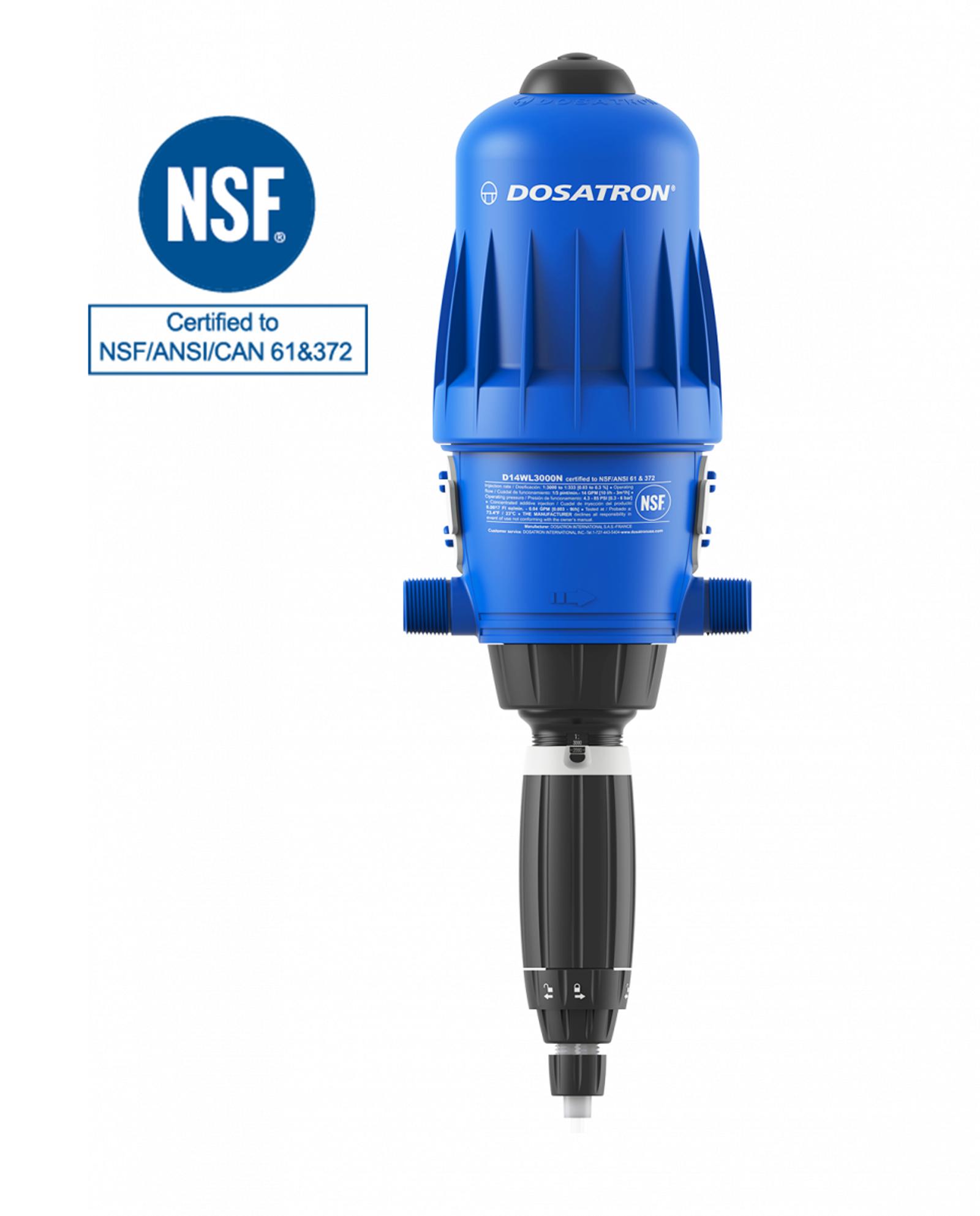
D14WL3000NAF
The standard NSF 61 certified configuration — the right choice for most homes on private wells, cisterns or off-grid supplies.
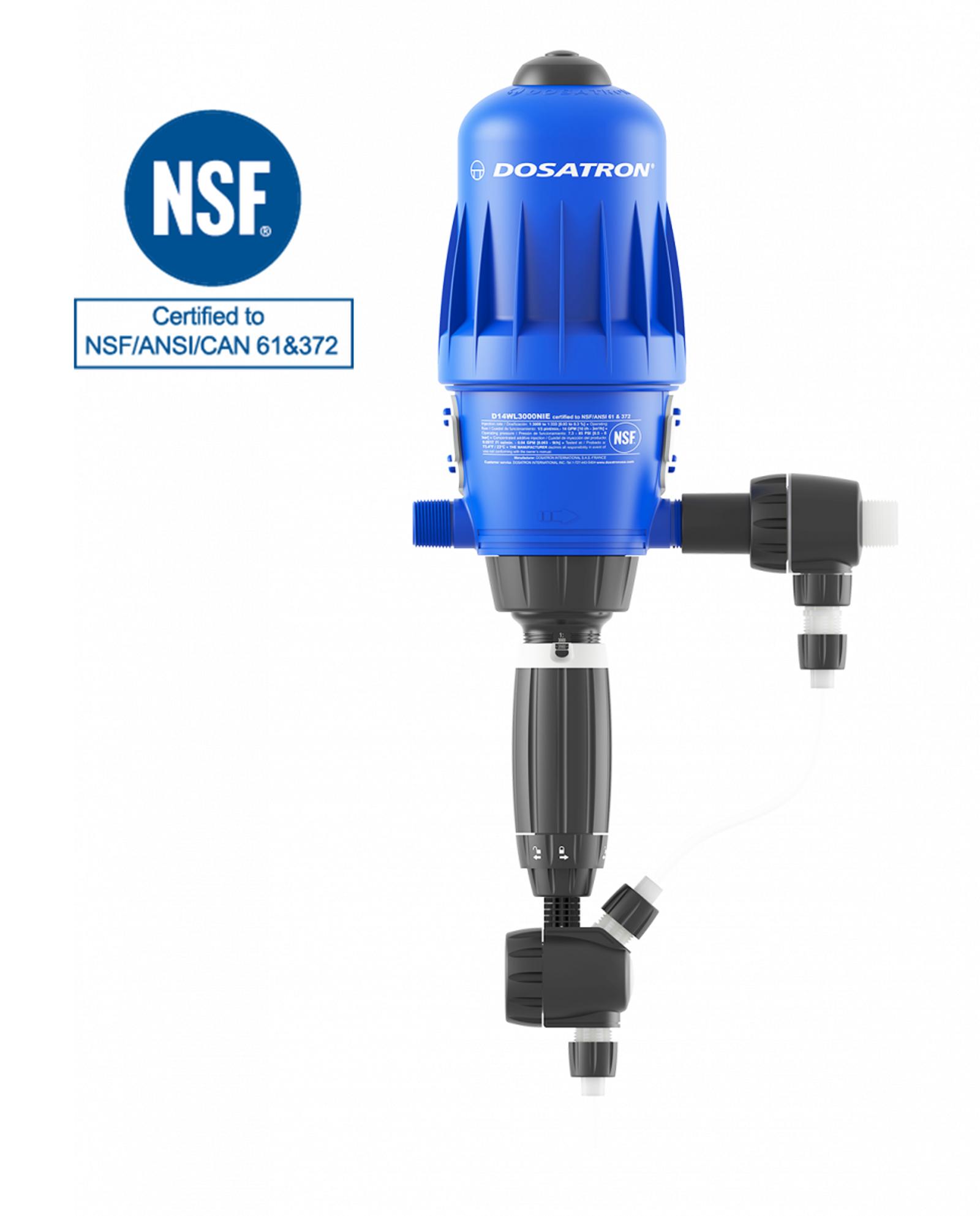
D14WL3000NIEAF
The same NSF 61 performance with an external injection (IE) configuration.
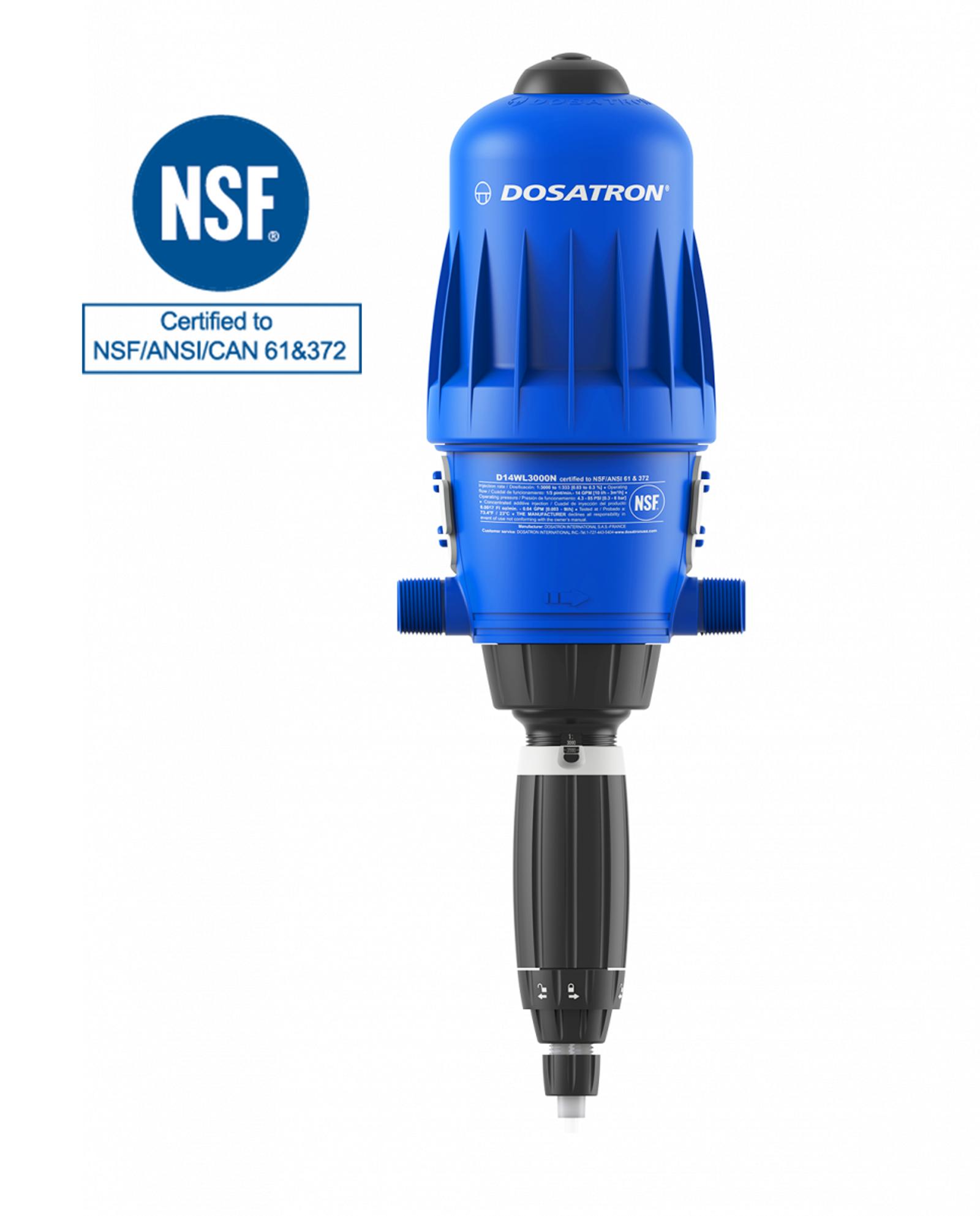
D14WL2NAF
An alternative NSF 61 certified configuration for installations that benefit from a different dilution range

From the Plant to Your Tap — A Connected Story
The same Ingersoll Rand portfolio that protects your home with Dosatron also engineers the plant-scale chlorination, polymer dosing, pH correction and clarification systems that treat water at the municipal source. Meet the upstream half of the story.