
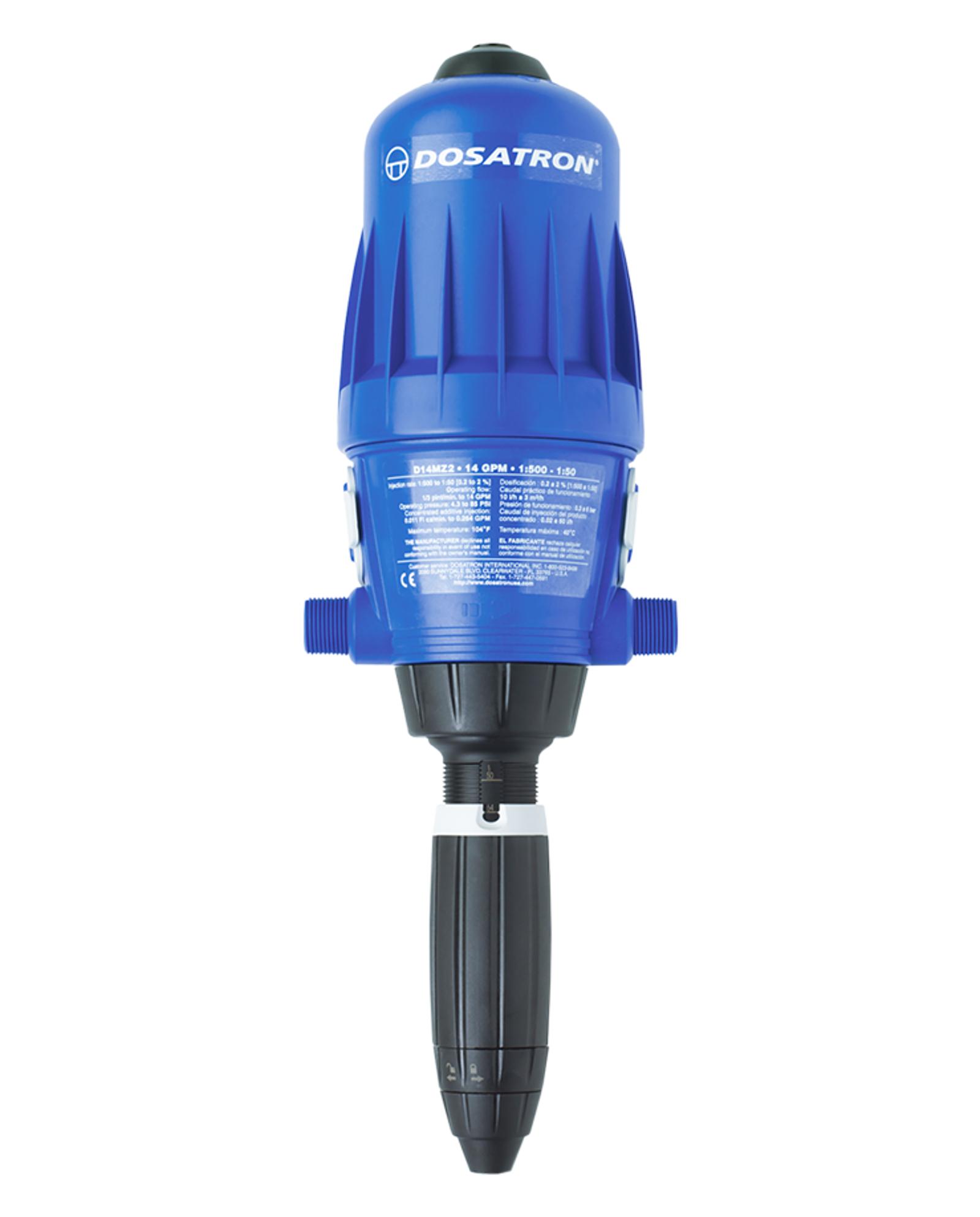
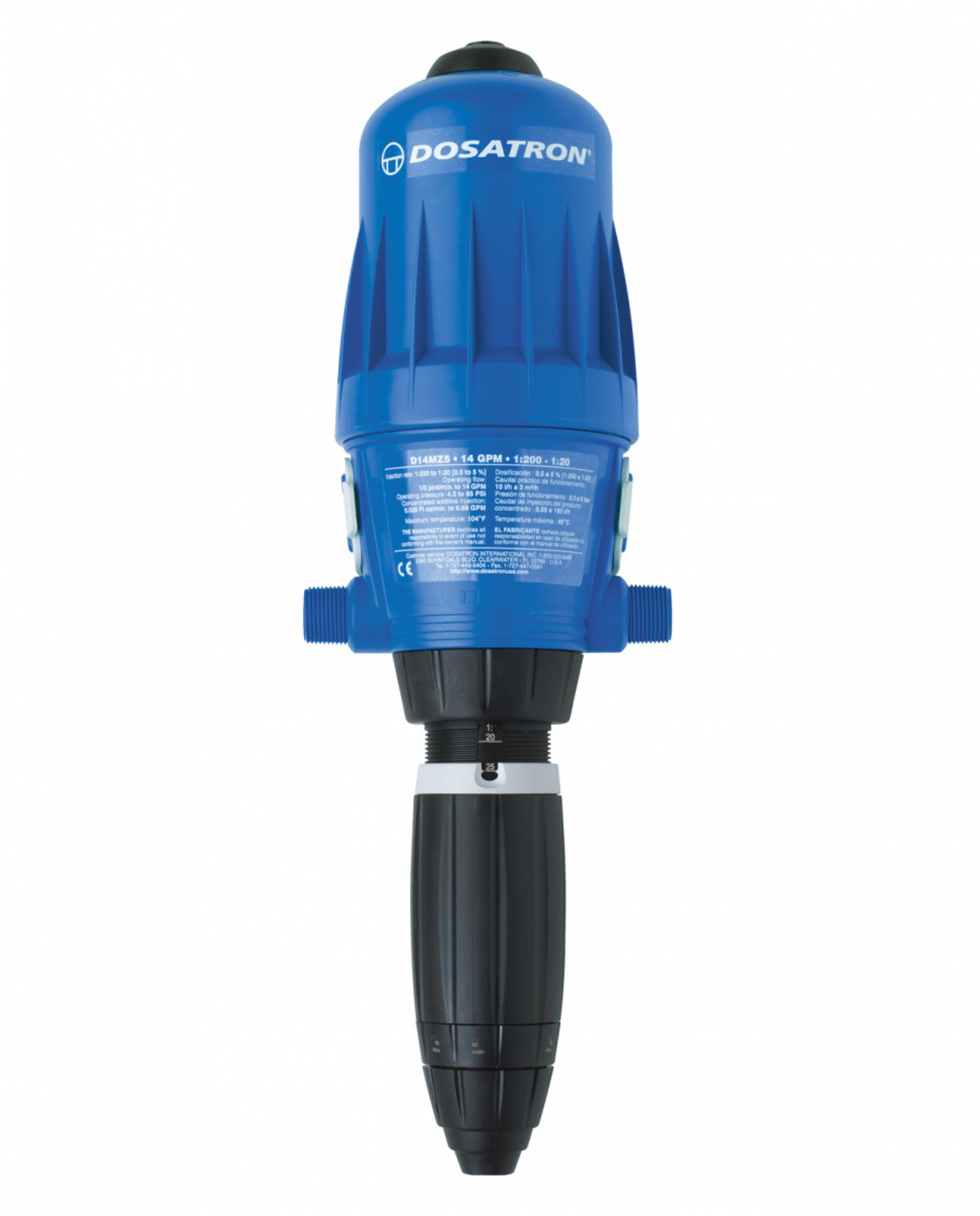
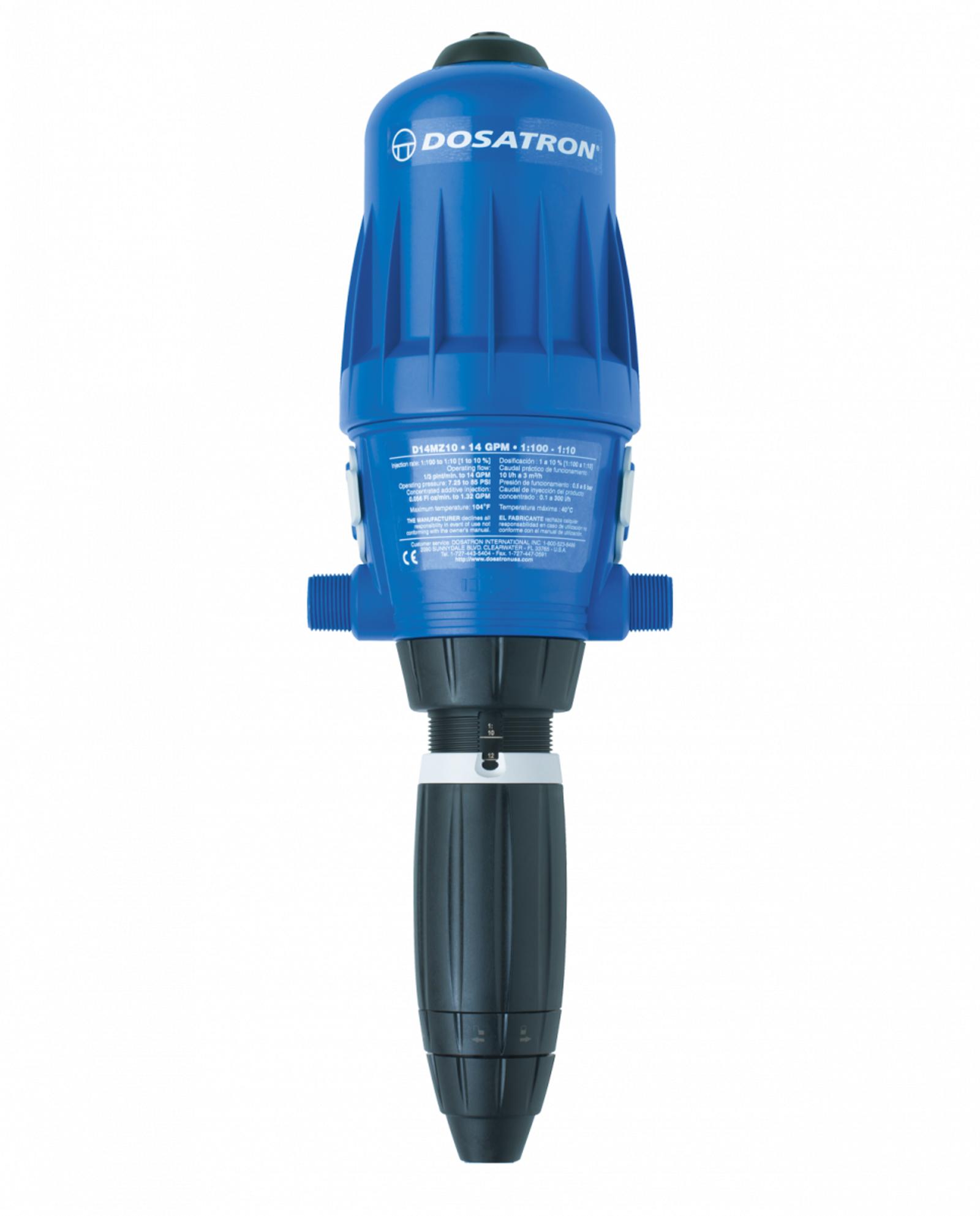
Dosatron water-powered proportional injectors remove that variable. Driven only by the pressure of the water already moving through your line, they draw concentrate and meter it at a fixed, repeatable ratio — every draw, every shift, whether the line is running wide open or throttled back. There is no electricity, no batch tank to mis-measure, and no drift between the first impression and the ten-thousandth.
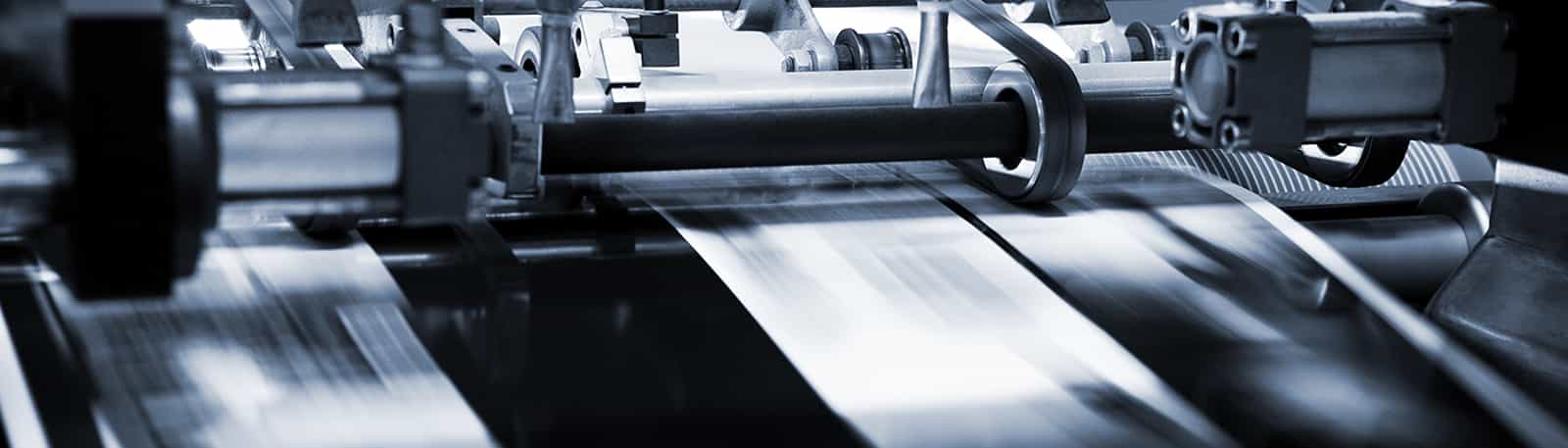
Offset print quality lives and dies on the ink–water balance, and the water side of that balance is chemistry you either control or chase. A dampening solution that drifts out of its window doesn't announce itself politely — it shows up as scumming, tinting, snowflaking, catch-up, foaming and plate blinding, usually halfway through a run and usually blamed on the ink first. The root cause is almost always upstream: the fountain concentrate, the alcohol substitute or the coating was diluted by hand, by eye, or by a batch that was correct yesterday and is not correct now.
Why dilution is the variable that fails first
In most pressrooms the fountain solution is still mixed manually or in batches: a cap of concentrate, a shot of IPA substitute, top up the tank, adjust by feel when the sheet looks wrong. It works until it doesn't. Concentrate viscosity changes as drums cool overnight, so a fixed pour delivers a different dose in January than in July. Tanks are topped up mid-shift without re-testing. Operators hand off between shifts with different definitions of "about right." Each of these is a small error, and each one moves the pH, the conductivity or the surface tension just far enough to destabilize the emulsion.
The measurable target for a conventional dampening solution is narrow: a pH of roughly 4.8–5.5, water hardness held around 8–12 °dH, and a solution temperature in the 10–15 °C range. Miss the pH low and you attack the plate and rollers; miss it high and you lose the buffering that keeps ink-water balance stable. Get the hardness wrong and additives stop performing regardless of dose. Proportional injection holds the concentration side of that equation constant so the press operator is adjusting print, not fighting chemistry

Hear From People Like You
"If our etch and fountain solutions aren't precisely mixed, my pressroom staff struggles. With Dosatron, hundreds of variables are wiped out by a single piece of equipment, so our mix is reliably precise. I can't say enough good things about Dosatron!"
Bob DavisRoberts Printing | Clearwater, FL
Why Dosatron in the pressroom
Because the injector proportions by volume of drive water, the same principle handles very different pressroom fluids at their own set ratios:
- Fountain / dampening solutions — the core duty: concentrate metered to a precise, repeatable percentage into treated make-up water.
- Alcohol substitutes (IPA replacements) — dosed consistently so you get the wetting and evaporation behaviour you specified without over-consuming a costly additive
- Silicone emulsions — for web and heatset applications where controlled, even application protects the sheet and the folder.
- Aqueous coatings — diluted on-ratio for consistent gloss, rub resistance and coat weight.
- Biocides / anti-slime additives — dosed to keep recirculating dampening systems clean.
Dose the Chemistry, Transfer the Ink
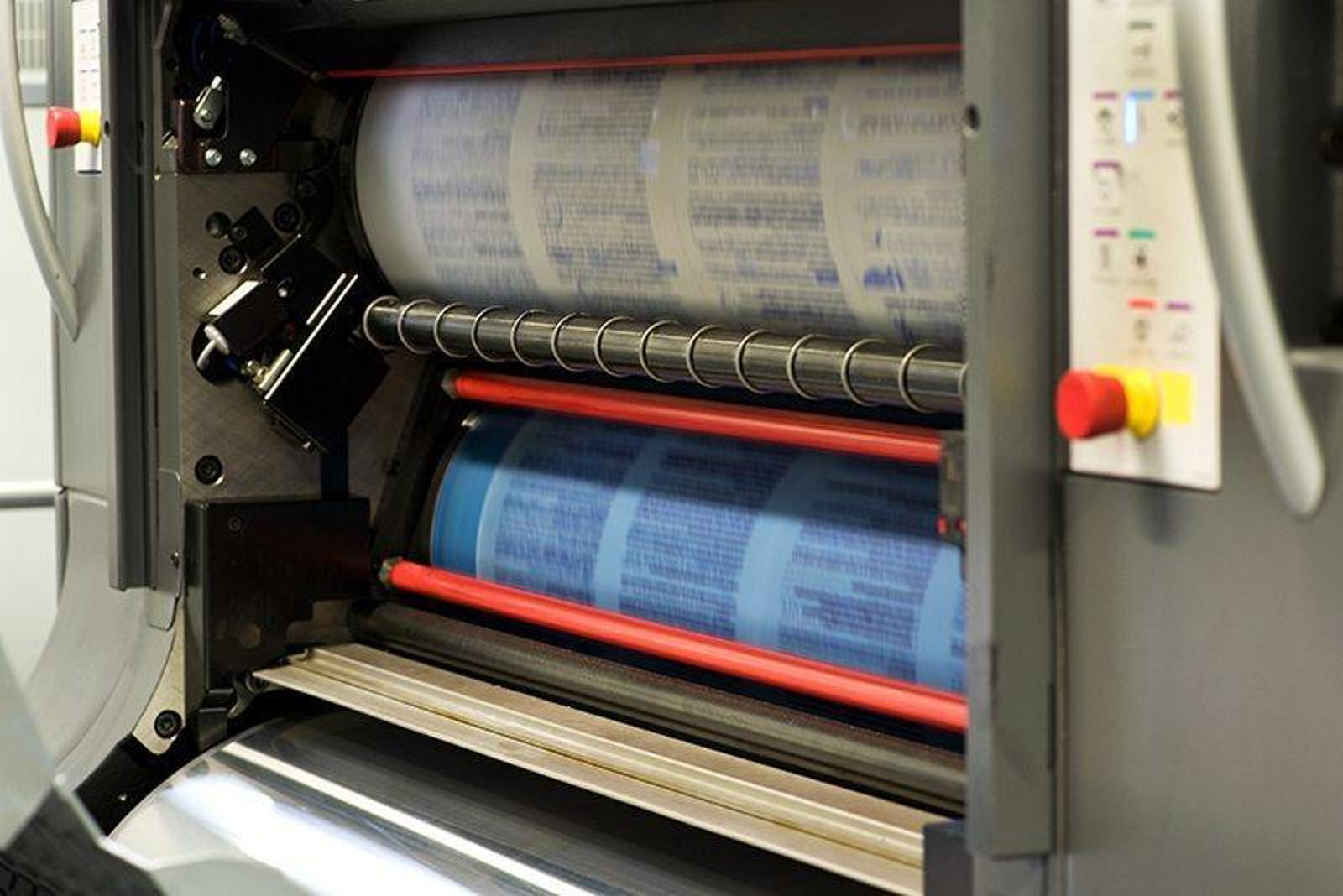
Dosatron controls the water-side chemistry — but moving ink, varnish and lacquer from drum to press is a separate problem, costly when a pump shears or pulses the ink. Sister brand ARO builds the low-pulsation diaphragm and piston pumps for exactly that: ink transfer from drums to press, solvent flushing, and lacquer feed to the coater. One portfolio covers the full fluid path.
Built to install and forget
Dosatron injectors are compact, serviceable in place, and available as pre-plumbed cabinet and panel systems so a pressroom retrofit doesn't turn into a plumbing project.
The Industrial Plumbing Kit (e.g. IPK34-14GPM for the D14MZ) arrives as an all-in-one install-and-protect package: isolation ball valves, a 200-mesh inlet filter to stop particulate, a pressure regulator with gauge, a flow restrictor, a check valve, unions for quick injector removal, PTFE tape and fittings.
The Vacuum and Air Behind Every Sheet
Clean chemistry keeps the image right, but nothing prints if the sheet won't feed, register and finish — and that side of the press runs on vacuum and air. Sister brand Elmo Rietschle supplies the vacuum pumps and blowers for pre-press, press and post-press: sheet feeding, drying, powder distribution, then folding, cutting and binding. Same discipline as your dosing, applied to the air side.
Recommended Products
View The Most Commonly-Used Injectors
Part of the Pulp, Paper & Printing Value Chain
Dampening chemistry is one link in a much larger fibre-and-water chain. Upstream in the mill, precise chemical dosing governs bleaching, fiber recovery and effluent treatment — the same discipline, applied to different chemistry. If your operation runs from the mill to the pressroom, you can standardize on one trusted metering portfolio across all of it: explore Milton Roy water treatment for pulp & paper for the process-water and bleaching side of the operation.