
Phosphorus Deficiency in Cannabis: Causes, Effects & Tips
Phosphorus (P) is the energy nutrient. It is a building block of ATP, DNA and cell membranes, and it drives root development, photosynthesis and flower formation. Demand climbs sharply in the transition to flower and early bulking, which is exactly when a shortage costs the most yield. A phosphorus-deficient plant does not just look stressed — it builds smaller, lighter buds.
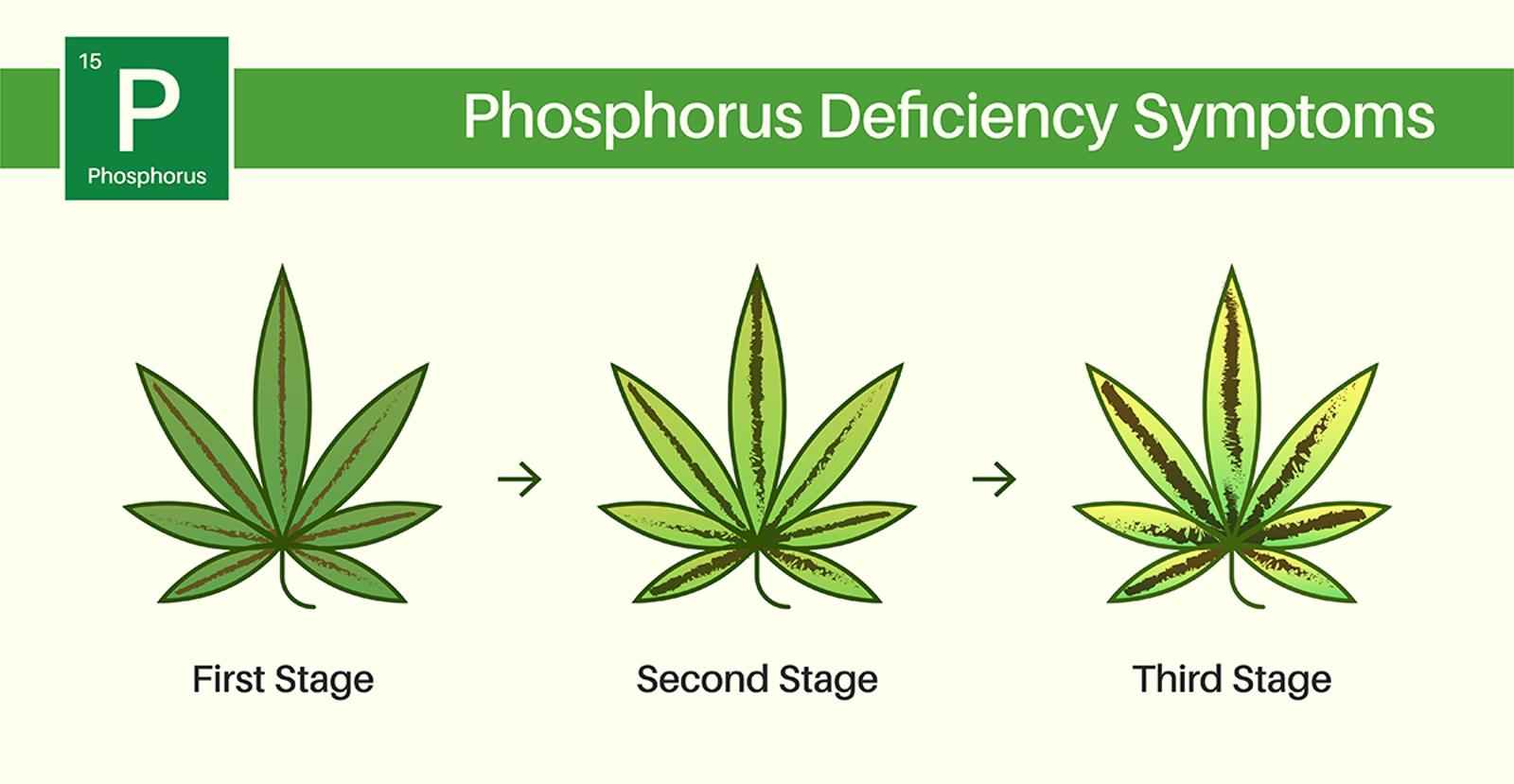
How to recognize phosphorus deficiency
Phosphorus is mobile in the plant, so symptoms appear on older, lower leaves first, as the plant moves P to new growth.
- Dark, dull blue-green lower leaves that look unusually deep in color.
- Purple or reddish stems and petioles (leaf stalks), beyond what is normal for the cultivar's genetics.
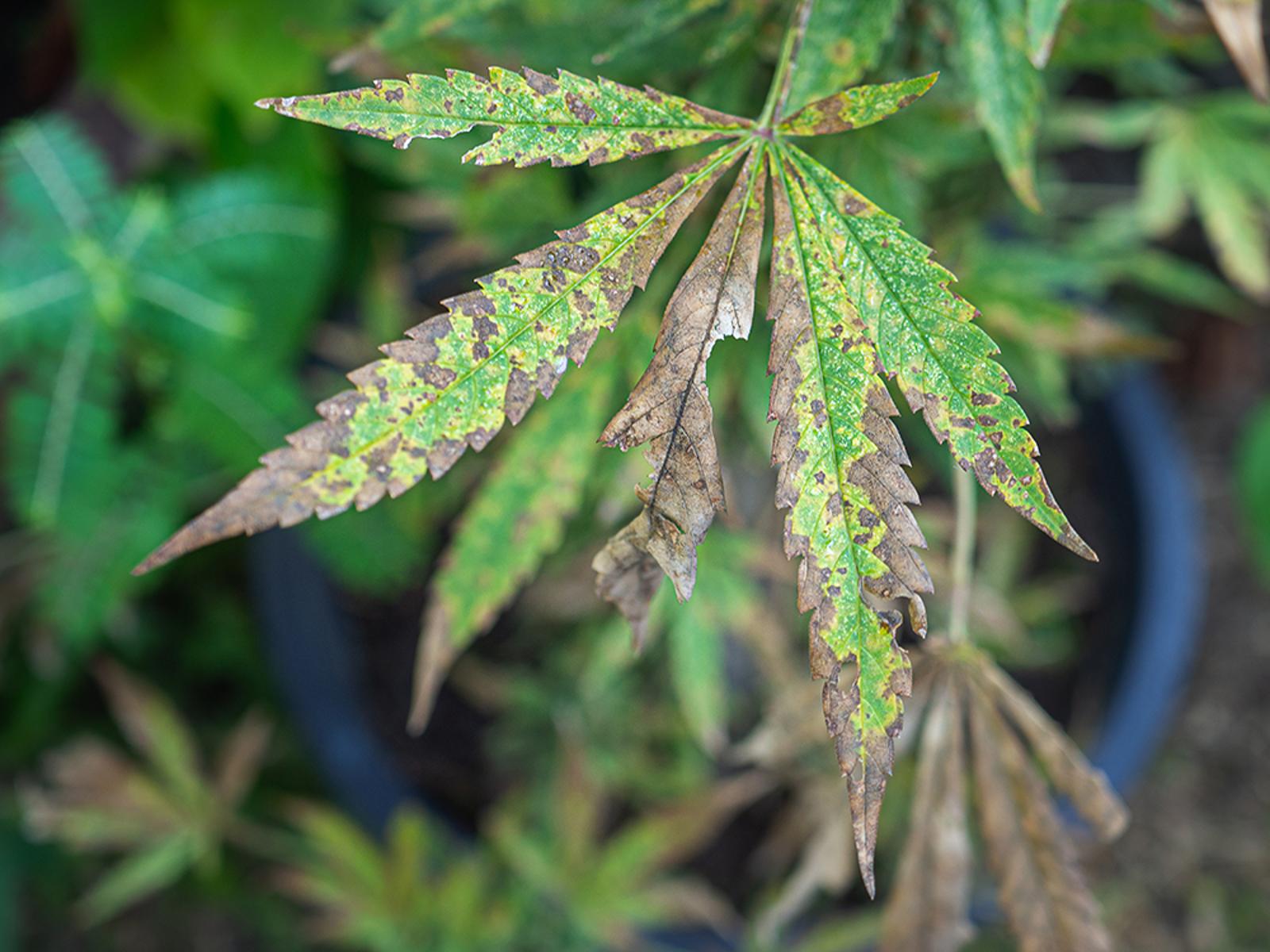
- Brown, bronze or purple blotches on older leaves that may feel stiff or crispy.
- Leaves that curl downward and die off from the bottom of the plant.
- Slow growth, delayed flowering and small, airy buds.
Tip: purple stems alone are not proof of deficiency — many cultivars purple naturally, especially with cool nights. Look for the combination of dark leaves, blotching and slowed growth.
Common causes
This is the number one cause. Phosphorus availability drops quickly outside its ideal window. Aim for roughly pH 6.2–7.0 in soil and 5.5–6.2 in hydroponics and coco. P can also bind with excess calcium or iron and become unavailable.
How to fix phosphorus deficiency in cannabis
- Check and correct pH at the input and runoff (or in the reservoir for hydro).
- If pH is off, flush gently with pH-adjusted water, then resume feeding at the right concentration.
- Switch to or increase a bloom formula with appropriate phosphorus during flower.
- Warm the root zone and irrigation water into the 65–75°F (18–24°C) range.
- Monitor new growth: damaged leaves will not recover, but healthy new leaves within a week or so show the problem is solved.
Don't overcorrect
Excess phosphorus can lock out zinc, iron and calcium, creating a new deficiency. More is not better — accuracy is.
Deficiency at a glance
| Phosphorus deficiency |
Mobility | Mobile — older leaves first |
Key signs | Dark blue-green leaves, purple stems, bronze/brown blotches |
Peak demand | Transition to flower and early bulking |
Ideal pH | Soil 6.2–7.0, hydro/coco 5.5–6.2 |
Common mix-up | Natural purple genetics, cold stress |
How Dosatron helps
Phosphorus problems are often dosing problems: too little, too much or inconsistent. Dosatron proportional pumps inject concentrated nutrient and pH-adjustment solutions at a fixed ratio regardless of water flow or pressure changes, so every plant gets the same feed. Multiple units in series let you dose base nutrients, bloom boosters and pH adjusters separately — no electricity required.
FAQ
The older, lower leaves, because phosphorus is mobile and moves to new growth.
Reach out to us