
Industries
Animal Health
Car Wash
Data Centers & Mission-Critical Cooling
Food Safety & Sanitation
Irrigation
Hemp
Mining & Aggregates
Nutrient Delivery System
Water Treatment
Metal Processing
Printing
Products
D07
Hobby Cultivator
D128
D25
DM11 (Diaphragm)
D14
D6
D40
D20
D132
D400
Carts
Installation-Ready Systems
Venturi
Discontinued Products

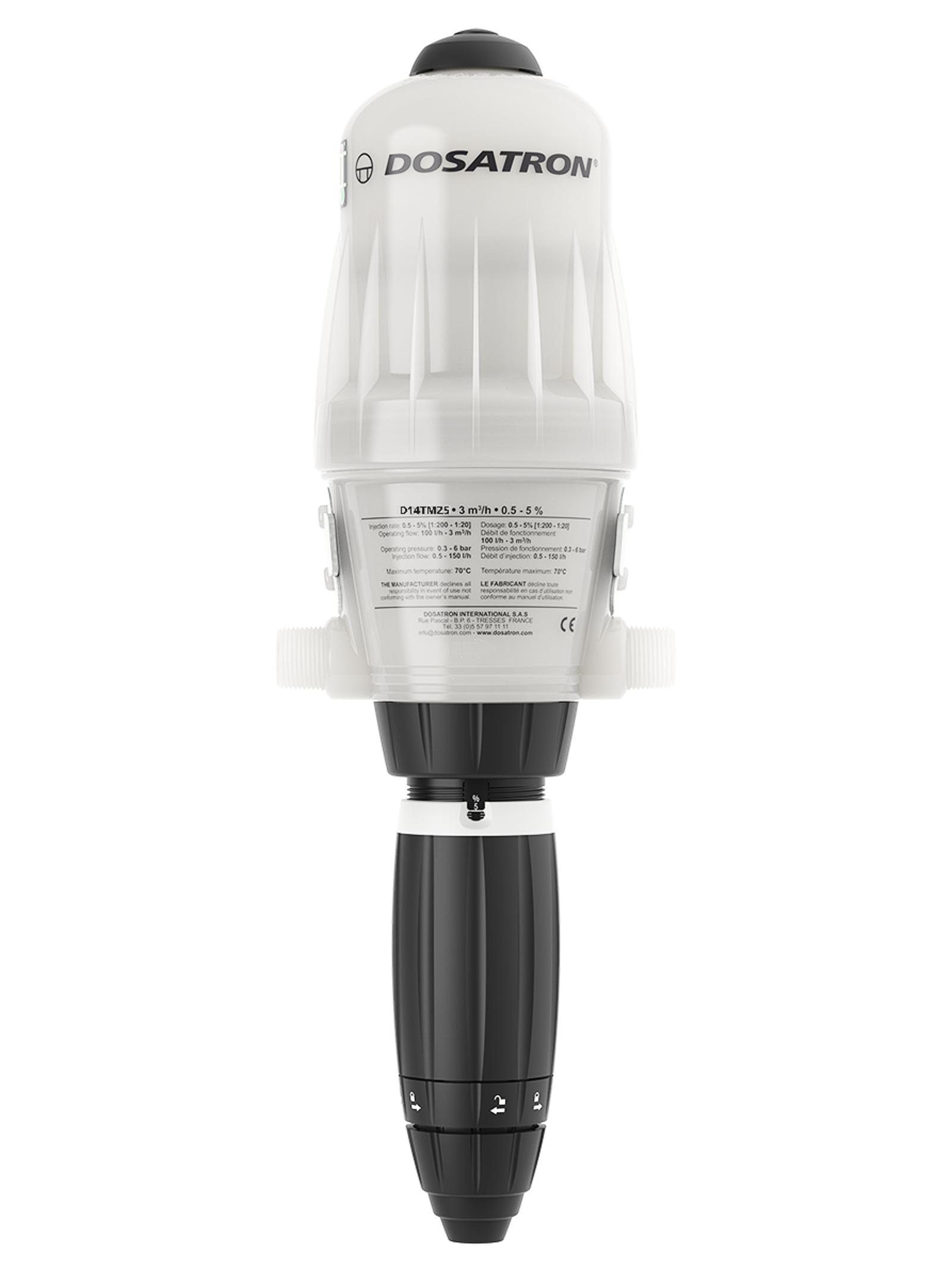
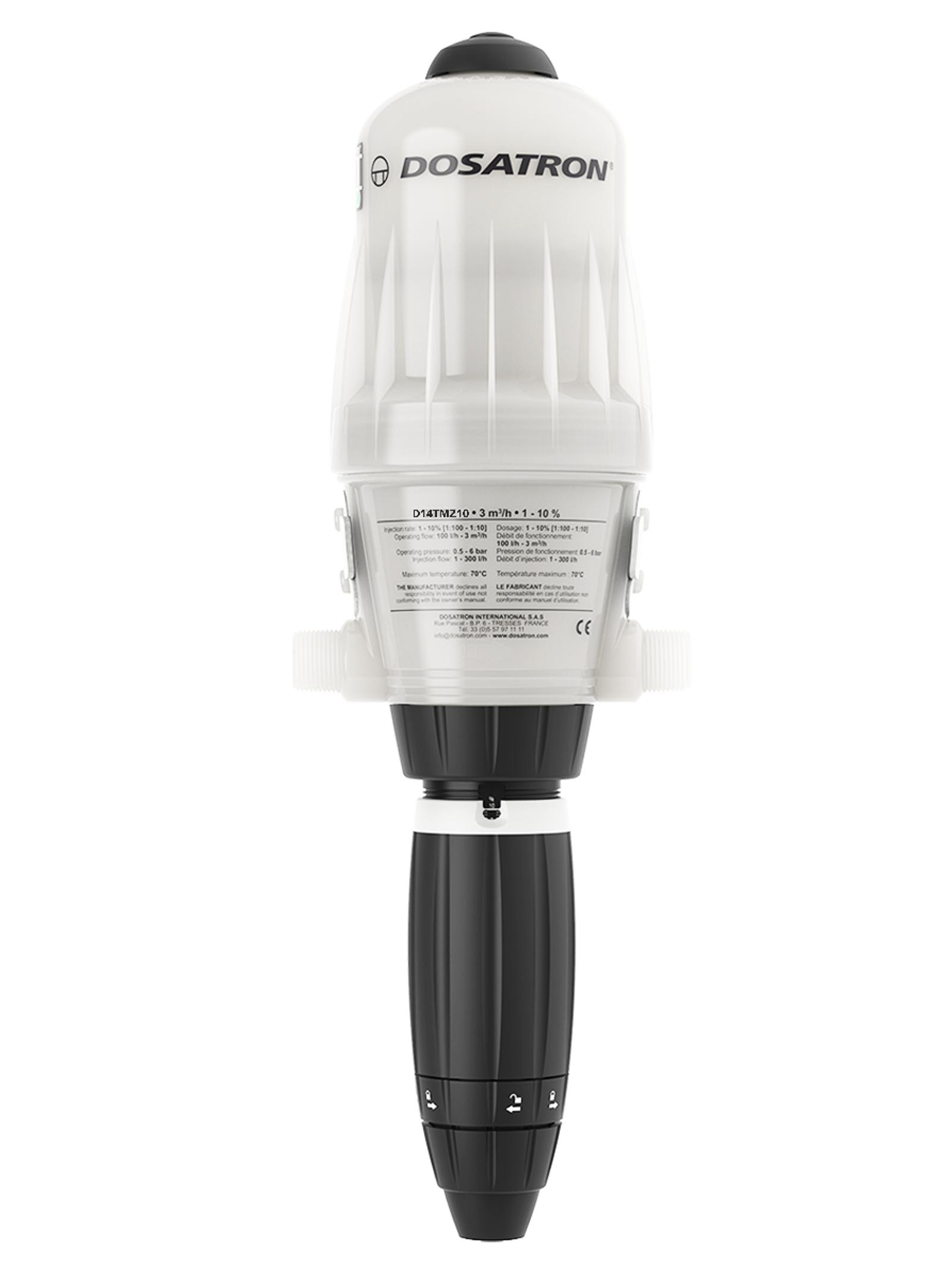
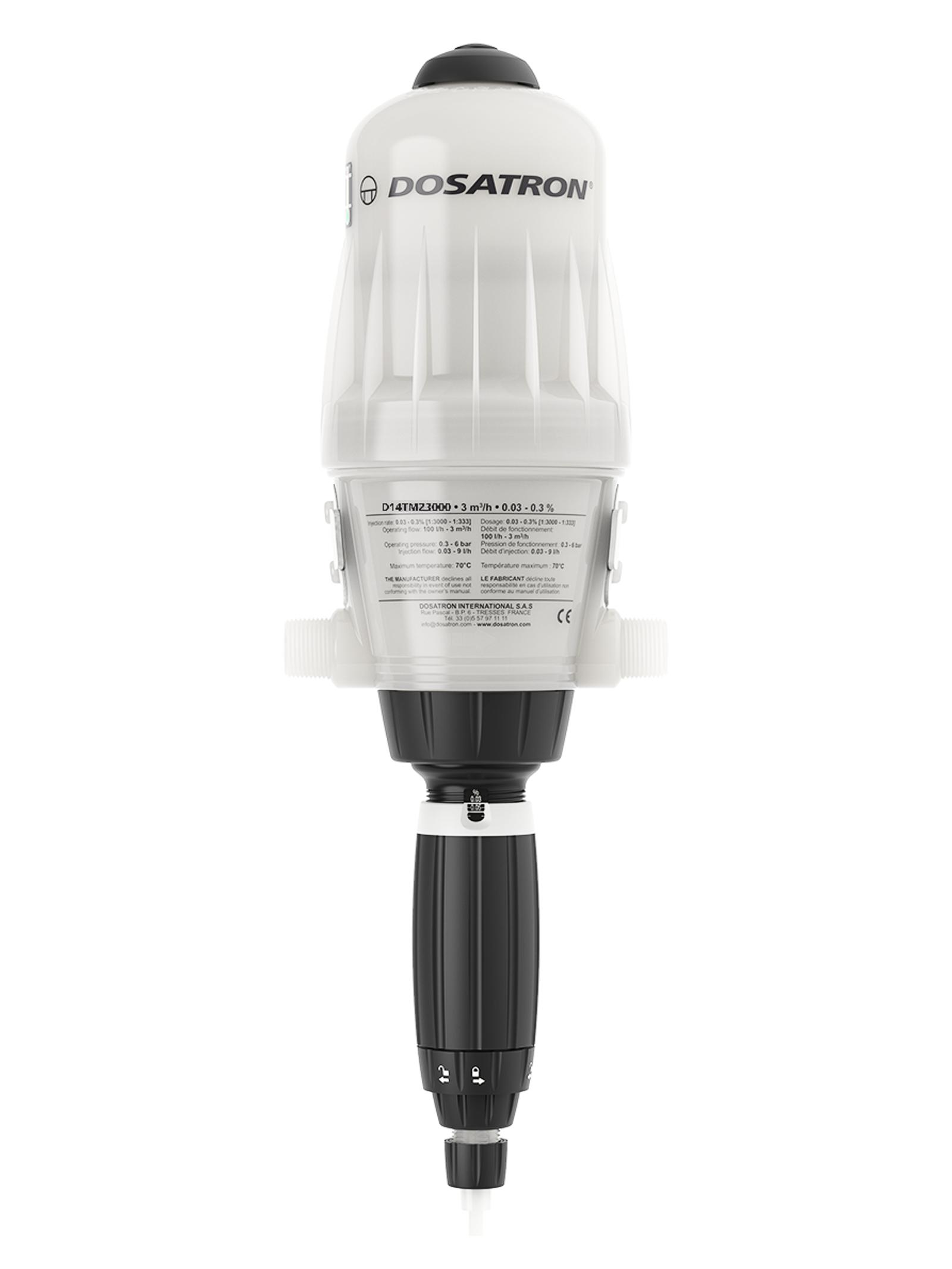
The D14T, a water-powered dosing unit designed to operate at water temperatures up to 158 °F, engineered to meter chemistry into hot-water sanitation lines. It exists for applications where ambient water cannot dissolve fats, hydrolyze proteins, or activate alkaline chemistries — the parts of the sanitation program where temperature is not a comfort setting but a process variable.

Why Temperature Is a Sanitation Variable, Not a Comfort Setting

CIP, COP, and foam sanitation programs are designed around temperature targets for engineering reasons, not operator preference. Below the target, soil removal collapses regardless of how long the solution sits on the surface. Heat is not a finish on the protocol — it is the protocol.

Standard sanitation temperature ranges:

  • Caustic CIP: 1–2% NaOH at 160–180°F (saponifies fats, hydrolyzes proteins)
  • Acid CIP: 0.5–1.5% phosphoric/nitric at 140–160°F (dissolves milkstone, beerstone, scale)
  • Hot water sanitization: 171°F immersion (manual) / 160°F utensil surface (mechanical)
  • Foam cleaning: 110–140°F (chlorinated alkaline at 1–3%)

A protocol calling for 1.5% caustic at 165°F that delivers 1.5% caustic at 95°F has failed the cleaning step. The D14T was designed so that concentration does not have to drop just because the temperature went up.

The Engineering Behind the D14T

The D14T uses the same water-powered proportional dosing principle as the rest of the Dosatron range — water pressure drives a piston that meters concentrate into the flowing stream at an adjustable, repeatable ratio. What distinguishes the temperature version is the materials and design choices made specifically for hot-water service.

Key design features:

  • High-temperature elastomers and seal compounds rated for thermal cycling
  • Reinforced piston engineered for repeated expansion under load
  • Chemical compatibility with caustic, acid, and oxidizer service at elevated temperature
  • Metal-free wetted path on key versions (critical for NaOH and PAA service)

This is not a cold-water injector with a higher temperature rating stamped on the spec sheet. It is purpose-built for the chemistry-temperature combinations that define hot sanitation.

Where the D14T Belongs in a Sanitation Program

The D14T fits anywhere a sanitation chemistry meets a hot water line. The core applications are:

  • CIP make-up skids — proportional caustic and acid charging into recirculation tanks
  • COP tanks — heated caustic delivery to disassembled parts at validated dilution
  • Foam pre-soak stations — chlorinated alkaline at 1–3% under warm conditions
  • Crate, tote, and combo washers — hot detergent against returnable containers
  • Smokehouse, oven, and cookline cleaning — high-temperature degreasing
  • Dairy and beverage sanitation — hot acid cycles for milkstone and beerstone
  • Hot water sanitization stations — chemistry feed for thermal sanitization complement

In each of these applications, the failure mode is identical when manual dilution is used: temperature is correct, contact time is correct, mechanical action is correct, and concentration is the one variable that drifted.

Why Hot Water Plus Manual Mixing Is a Hidden Failure Mode

A meaningful share of sanitation deviations originate in operations that already use hot water but still mix chemistry by hand, by eye, or by feel. Caustic added to a hot CIP tank by visual estimate produces a concentration that depends on who poured it. A foam unit pickup tube draws inconsistently as concentrate thickens or cools, particularly with chlorinated alkaline formulations that change viscosity with temperature. A heated dilution tank holding PAA degrades the active faster than the crew expects, and the sanitizer titrates below spec by mid-shift without anyone noticing. A quat foam diluted in a 5-gallon bucket is refilled inconsistently across shifts, and the verification swab catches the deviation a week later.

In each case the chemistry was correct, the temperature was correct, the application was correct — and the dilution failed. The D14T addresses this by injecting concentrate inline at the wand, the foamer, or the tank, so the C in TACT stays locked while the T does its job.

Specify the Right D14T for Your Hot Sanitation Application

Mapping a CIP cycle, COP soak, foam chemistry, or hot-water sanitation step to the right D14T configuration removes one of the most common sources of cleaning failure from the program.