
Industries
Animal Health
Car Wash
Data Centers & Mission-Critical Cooling
Food Safety & Sanitation
Irrigation
Hemp
Mining & Aggregates
Nutrient Delivery System
Water Treatment
Metal Processing
Printing
Products
D07
Hobby Cultivator
D128
D25
DM11 (Diaphragm)
D14
D6
D40
D20
D132
D400
Carts
Installation-Ready Systems
Venturi
Discontinued Products

The surface tension formula shows how liquids behave at a surface. It explains how strong the liquid surface is and how it reacts to force.

In engineering systems, surface tension affects how liquids spread, move, and interact with solid materials. These effects are important in cleaning, coating, and chemical mixing.

This guide explains the surface tension formula in simple terms. It also shows how it applies in real systems and why it matters in daily operations.

What Is Surface Tension?

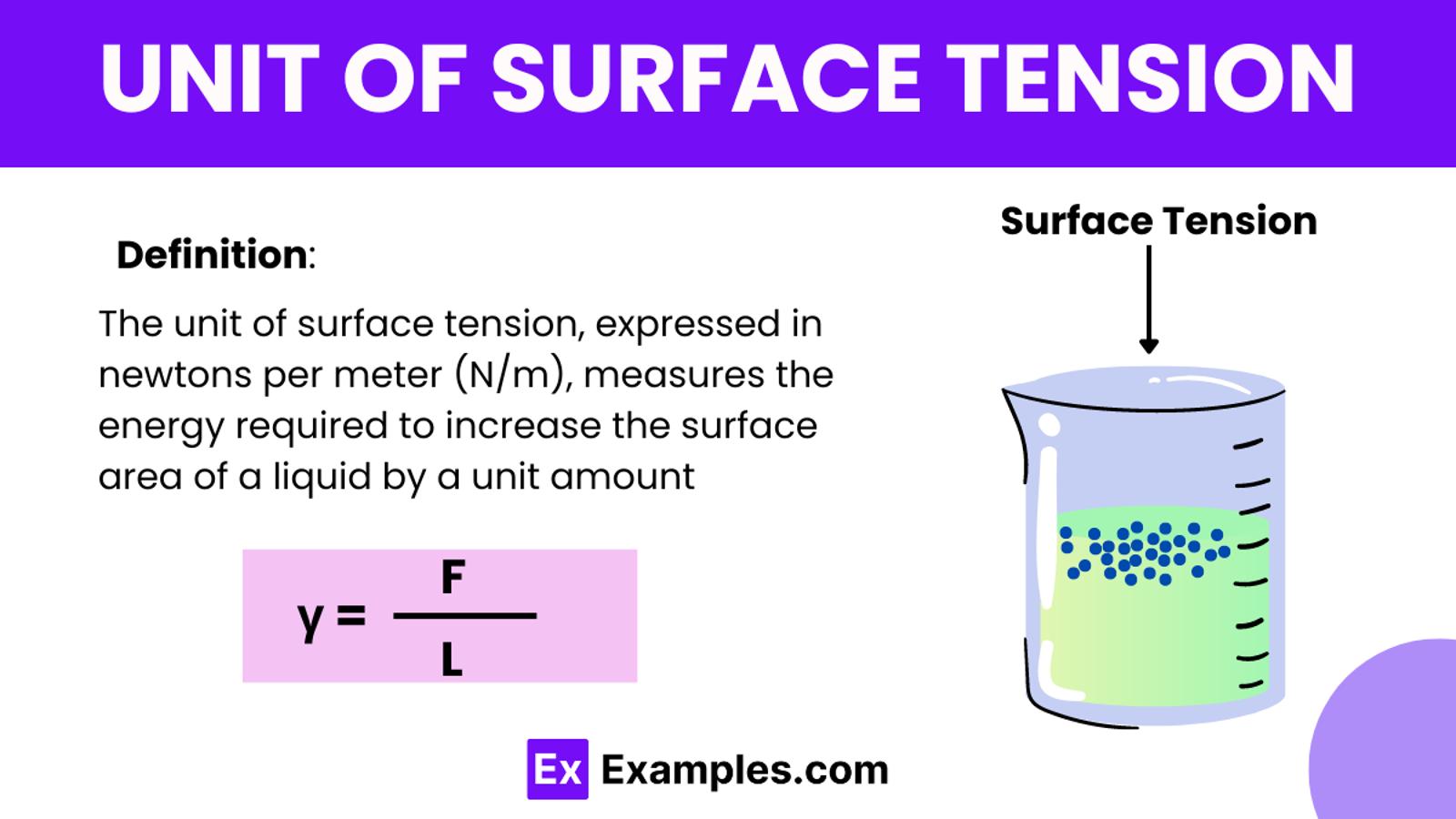
Surface tension is the force at the surface of a liquid. It comes from cohesive forces between liquid molecules.

Inside the liquid, molecules pull in all directions. At the surface, they only pull inward. This creates a force along the surface.

Because of this, the surface behaves like an elastic film. It can resist small forces while still holding its shape.

Surface tension

Everyday Examples

Surface tension can be seen in everyday situations.

Water forms round droplets instead of spreading flat. A paper clip can stay on the surface of water. Rain forms beads on smooth surfaces like glass or metal.

These examples show how the surface can hold together and resist outside forces.

Surface Tension of Water Explained

Water has a higher surface tension than most common liquids. This is caused by strong attraction between water molecules.

Because of this, water forms round droplets and does not spread easily. It can sit on a surface before it begins to move.

In real systems, this behavior can reduce performance. For example, water may not reach small cracks or dirt on a surface.

To improve this, chemicals are often added to change how water behaves.

The Surface Tension Formula

The surface tension formula helps measure how strong the liquid surface is.

Basic Formula

Surface tension (γ) = Force (F) ÷ Length (L)

Surface tension is defined as force per unit length:

γ = F ÷ L

In this equation, γ represents surface tension. F is the force acting along the surface. L is the length where the force is applied.

This formula shows how strong the surface is. A higher value means the surface is tighter and more resistant to change.


The Surface Tension Formula

Understanding the Formula in Simple Terms

The surface of a liquid can be compared to a stretched edge.

If the same force acts over a short distance, the surface tension is higher. If the force spreads over a longer distance, the surface tension becomes lower.

This is why small droplets often show stronger surface effects. The force is concentrated over a smaller area.

How Surface Area Affects Surface Tension

Liquids naturally try to reduce their surface area. This helps lower energy.

Because of this, droplets form into round shapes. A sphere has the smallest possible surface area for a given volume.

This behavior also affects how liquids spread across surfaces. When surface tension is controlled, liquids can cover areas more evenly.

Why Surface Tension Matters

Surface tension affects how liquids behave in many systems. It controls how fluids spread, wet a solid surface, and interact with materials.

In real operations, small changes in surface tension can create large differences in performance. Liquids may spread unevenly, or they may not reach the target surface.

Stable surface tension helps maintain consistent results. This is important in processes where uniform coverage and repeatability are required.

How Surface Tension Affects Cleaning

Surface tension plays a key role in cleaning performance.

If surface tension is high, liquids tend to stay in droplets. These droplets may sit on top of the surface and fail to reach dirt or debris.

When surface tension is reduced, the liquid spreads more easily. It can move into small cracks and rough areas. This allows better contact with the surface.

As contact improves, cleaning becomes more effective. Less chemical is needed, and results become more consistent.

How Surface Tension Affects Cleaning

Capillary Action and Surface Tension

Capillary action is another effect linked to surface tension. It describes how liquids move through small spaces.

This movement depends on two forces. Liquid molecules attract each other, and they also attach to nearby surfaces.

When a surface attracts the liquid, the liquid will spread and rise along it. This allows fluid to move through small channels.

This behavior is useful in systems that rely on controlled flow. It is important in cleaning, filtration, and material absorption.

How Chemicals Change Surface Tension

Chemicals can change how a liquid behaves at the surface.

Some chemicals weaken the attraction between molecules. This lowers surface tension and allows the liquid to spread more easily.

Other chemicals may have a smaller or slower effect. The result depends on the type of chemical and the concentration used.

To get stable performance, the system must reach a balance. Surface tension should be low enough for spreading but stable enough to maintain control.

Role of Surfactants

Chemicals can change how a liquid behaves at the surface.

Some chemicals weaken the attraction between molecules. This lowers surface tension and allows the liquid to spread more easily.

Other chemicals may have a smaller or slower effect. The result depends on the type of chemical and the concentration used.

To get stable performance, the system must reach a balance. Surface tension should be low enough for spreading but stable enough to maintain control.

Importance of Measuring Surface Tension

Surface tension must be measured to keep systems under control.

Measurement helps predict how a liquid will behave. It shows whether a fluid will spread, bead, or remain stable.

In industrial processes, this information supports quality control. It helps detect changes before they affect performance.

Regular measurement also makes it easier to adjust chemical levels and maintain consistent results.

The Link Between Surface Tension and Chemical Dosing

Surface tension depends on chemical concentration.

If the dose is too high, surface tension may drop too much. This can cause over-spreading or unstable behavior.

If the dose is too low, the liquid may not spread enough. This reduces performance in cleaning or coating systems.

Accurate dosing keeps the system balanced. It helps maintain steady surface properties over time.

How Dosatron Supports Surface Tension Control

Consistent chemical dosing supports stable surface tension.

Flow-driven dosing systems adjust chemical levels based on water flow. This helps keep concentrations steady during operation.

When dosing remains consistent, results become more predictable. Surface tension stays within the desired range.

This reduces variation and supports better overall system performance.

Dosatron Diagram

Real-World Applications of Surface Tension

Surface tension affects how liquids behave across many industries.

In cleaning systems, it controls how fluids spread and remove contaminants. In coating processes, it affects how liquids cover and stick to surfaces.

In chemical systems, it helps manage mixing and separation. It also affects how liquids behave during storage and transport.

Controlling surface tension improves efficiency and product quality in each of these cases.

Surface Tension in Spraying Systems

Spraying systems rely on surface tension.

High surface tension creates larger droplets. These droplets are heavier and do not spread as easily.

Lower surface tension allows droplets to break into smaller sizes. Smaller droplets spread more evenly across a surface.

Better spreading improves coverage and reduces waste. This makes spraying more efficient.

Factors That Change Surface Tension

Surface tension can change based on several factors.

Temperature is one of the most important. As temperature rises, surface tension decreases.

Chemical concentration also plays a major role. Additives can either raise or lower surface tension depending on their structure.

Even small changes in the environment can affect results. This is why monitoring is important.

Surface Tension and Material Type

Different liquids have different surface properties.

Water has high surface tension. Alcohols have lower surface tension. Oils vary depending on their composition.

These differences affect how each liquid interacts with surfaces. Some liquids spread quickly, while others remain in droplets.

Understanding these differences helps select the right fluid for each application.

Temperature and Surface Tension

Temperature has a direct effect on surface tension.

As temperature increases, molecules move faster. This weakens the attraction between them and lowers surface tension.

At lower temperatures, molecules move less. This increases surface tension and makes the surface stronger.

Temperature control is important in systems where surface behavior must stay consistent.

Measuring Surface Tension in Practice

Surface tension can be tested in simple ways or with specialized tools.

Basic observations include looking at droplet shape and how a liquid spreads on a surface. These tests give quick feedback.

More accurate methods measure force or pressure. These methods provide precise values for analysis.

Both simple and advanced methods are useful, depending on the level of control required.

Monitoring Surface Performance

Surface performance should be checked over time.

Changes in liquid behavior can indicate a shift in surface tension. For example, reduced spreading or uneven coverage may signal a problem.

By tracking these changes early, adjustments can be made before system performance is affected.

Process Control and Surface Tension

Stable surface tension is critical for process control.

If surface tension changes, liquids may not spread evenly. Cleaning results can vary, and coatings may become inconsistent.

Keeping conditions stable helps maintain reliable performance. This includes managing temperature, chemical levels, and flow conditions.

Common Mistakes to Avoid

Some common issues can reduce system performance.

Incorrect chemical mixing can lead to unstable surface tension. Temperature changes can also shift liquid behavior.

Poor measurement practices may hide these problems.

Identifying and correcting these issues improves consistency and results.

Best Practices for Better Results

Improving surface tension control requires consistent steps.

Maintain proper chemical levels and monitor system conditions regularly. Test performance to confirm expected results.

Small adjustments can make a large difference. Regular checks help prevent larger issues over time.

Long-Term Benefits of Surface Tension Control

Controlling surface tension improves performance over time.

Systems become more stable and easier to manage. Product quality improves, and waste is reduced.

Better control also helps reduce chemical use and operating costs.

Final Thoughts

The surface tension formula describes how force acts along a liquid surface.

This force controls how liquids spread, move, and interact with materials. It plays a key role in many industrial processes.

By managing temperature, chemical levels, and dosing, surface tension can remain stable.

Stable surface tension leads to consistent performance, better efficiency, and improved results.