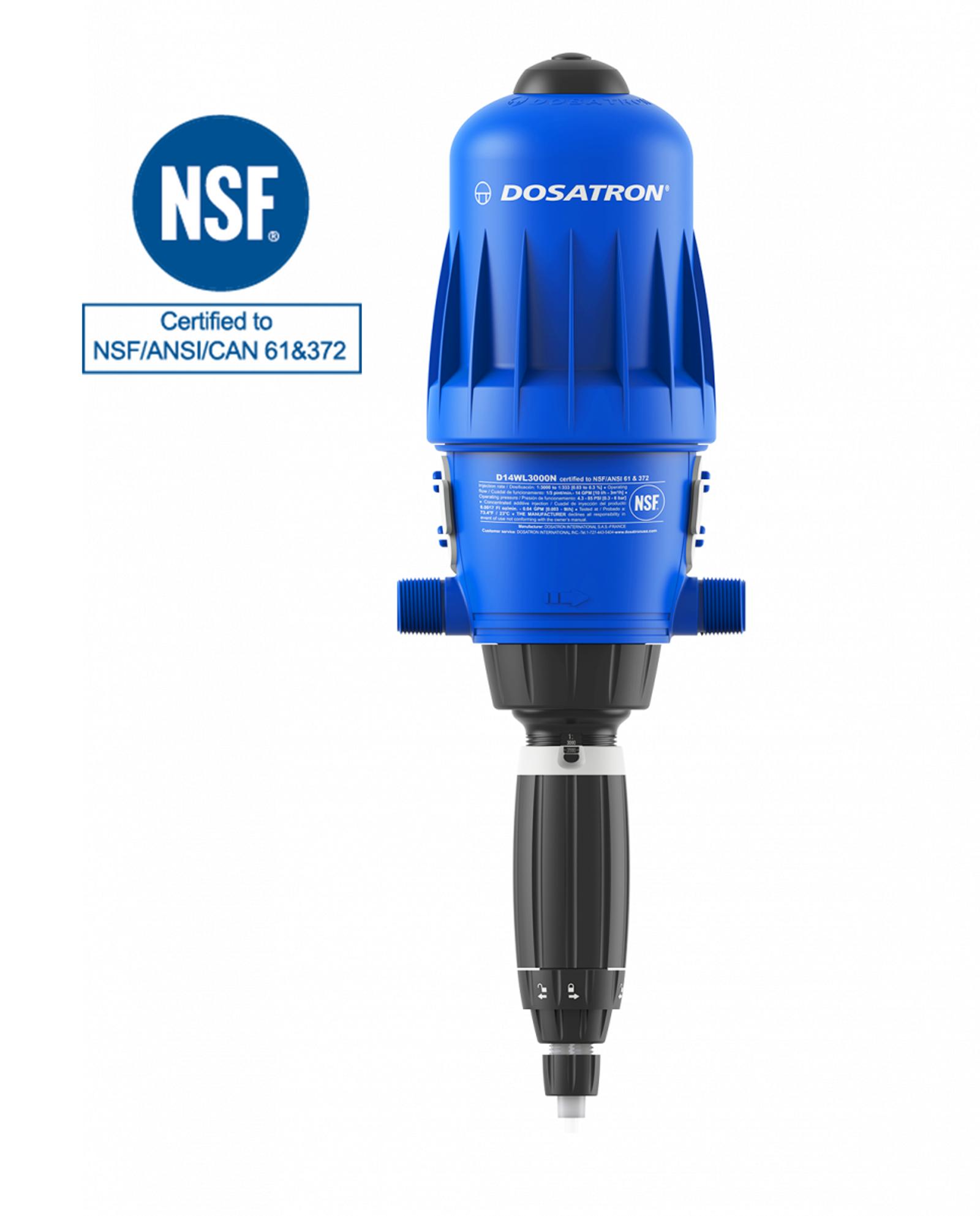
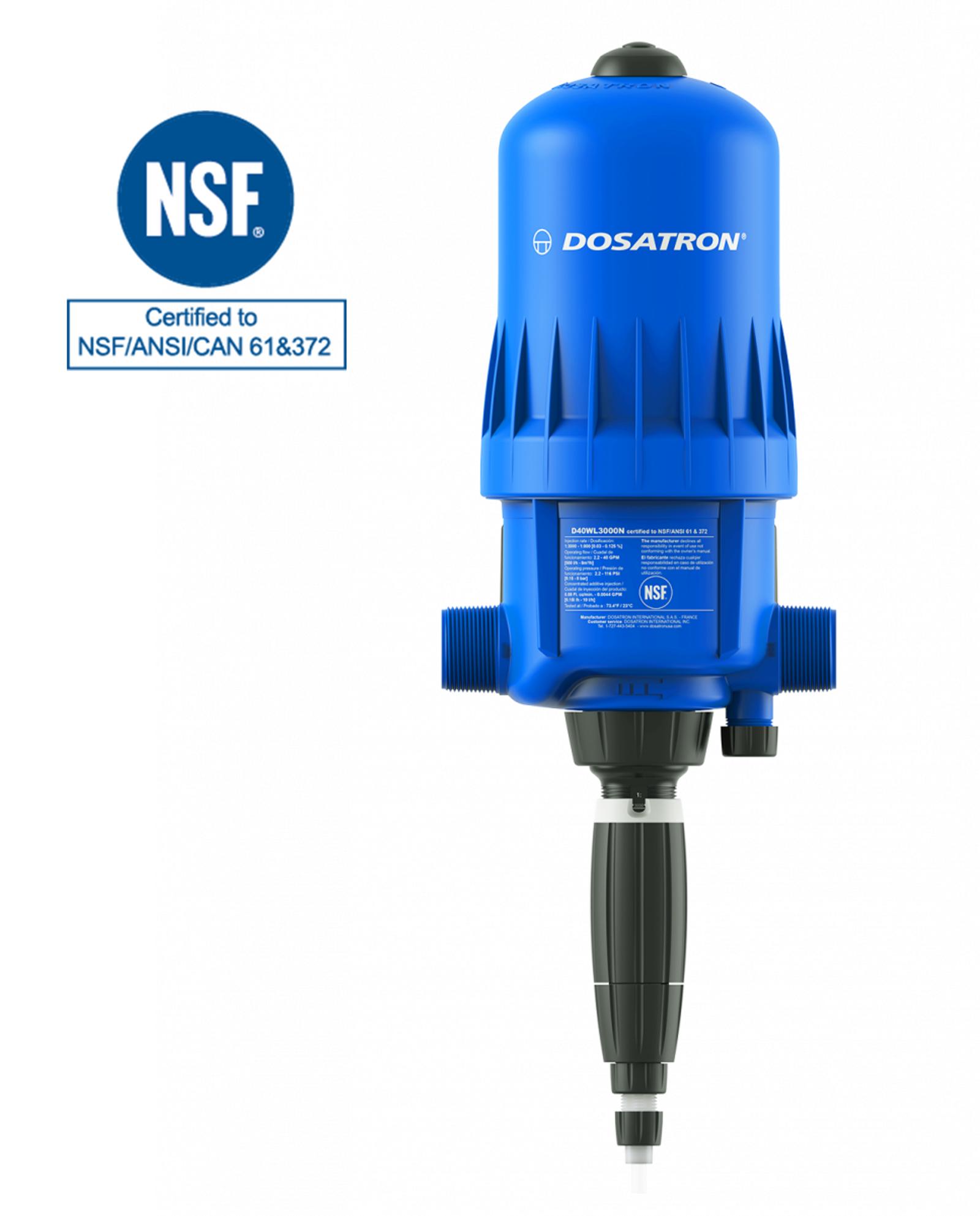
Specifying the correct chlorine dose is a four-variable problem: the target free chlorine residual at the consumption point, the strength of the sodium hypochlorite stock product, the injection ratio set on the Dosatron unit, and the volume of the stock-solution tank. Get any one of those wrong and the residual at the tap drifts above or below the target — either compromising disinfection or creating taste and corrosion issues downstream.
The Dosatron Chlorine Dosing Calculator removes the guesswork. Enter the four inputs and the tool returns the exact volume of sodium hypochlorite, in ounces, required to prepare one full stock-tank refill at the specified target. The calculation is sized for residential, well water, small community and field-deployable applications using the D14WL Low-Flow Chlorinator (0.05 – 14 GPM) and the D40WL High-Flow Chlorinator (2.2 – 40 GPM), both certified to NSF/ANSI/CAN 61 & 372.
The output assumes ideal water conditions. Site-specific chlorine demand — driven by organic load, iron content, sulfur reducers, biofilm and pH — will reduce the effective free chlorine residual measured at the tap, and may require an increased dose. After commissioning or any adjustment, always verify the residual at the closest and furthest consumption points using a DPD reagent kit or accredited test strip.