
What Does Moldy Weed Look Like?
Mold is one of the most expensive problems in cannabis. For consumers it is a health risk; for commercial growers it means failed microbial tests, destroyed batches, recalls and lost retail shelf space. In most regulated markets, flower is screened for yeast, mold and specific pathogens before sale, so a single humid week in late flower can wipe out a harvest's value. The good news: almost every mold outbreak traces back to controllable factors — humidity, airflow, plant density, irrigation and hygiene.
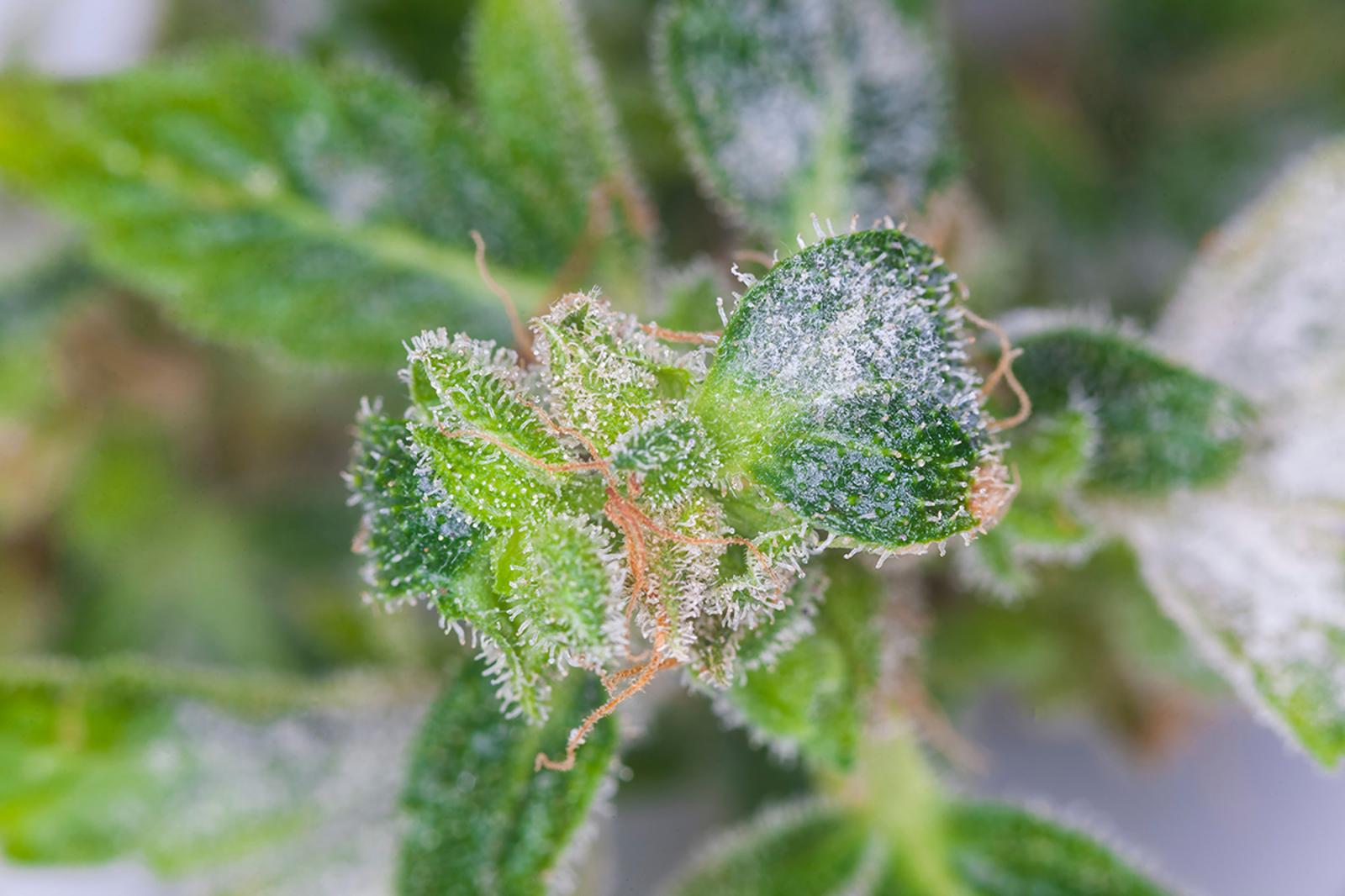
Trichomes or mold? The 10-second check
- Trichomes are shiny, crystal-like and mushroom-shaped under a loupe (60x); they sparkle and sit evenly on buds and sugar leaves.
- Mold is dull, fuzzy or web-like, spreads in patches and often looks like dust or cotton strands.
- Trichomes never wipe off cleanly; powdery mildew often smudges when rubbed.
- Healthy cannabis smells skunky, fruity or fuel-like; mold smells musty, like a damp basement or wet laundry.
Visual signs of moldy weed
- White or gray powder on leaves and buds: typically powdery mildew, often starting on upper leaf surfaces.
- Gray-brown fuzz inside dense colas: the hallmark of Botrytis (bud rot), which starts in the stem of the bud and works outward.
- Dark brown or black spots and irregular discoloration on buds or leaves.
- Single dying sugar leaves pulling away from a cola — often the first external sign of hidden bud rot.
- Spongy, damp or crumbly texture: well-dried flower is slightly sticky but firm, and small stems snap rather than bend.
The most common types of cannabis mold
Mold | What it looks like | Where it starts | Main trigger |
Powdery mildew | White, flour-like powder | Leaf surfaces, then buds | Humidity swings, poor airflow, crowded canopy |
Botrytis (gray mold / bud rot) | Gray fuzz, brown mushy bud interior | Inside dense colas | High RH in late flower, cool nights, condensation |
Fusarium | Wilting, brown stem base, root rot | Roots and stems | Warm, wet root zone, contaminated water or media |
Pythium (root rot) | Brown, slimy roots | Root zone, especially hydro | Warm, low-oxygen nutrient solution |
Alternaria | Dark brown-black spots | Leaves, then buds | Warm, humid conditions, plant debris |
How to prevent mold in cannabis, from veg to cure
Manage VPD rather than humidity alone. As a general guide: around 60–70% RH in veg, 50–60% in early flower and 40–50% in late flower. Avoid temperature drops at lights-off that push leaf surfaces to dew point — that is when condensation and Botrytis start.
Can you save moldy cannabis?
How Dosatron helps
FAQ
Use a 60x loupe. Trichomes are glassy stalks with round heads; powdery mildew is flat, dull and powdery, and it often smudges when touched.
Reach out to us