
Industries
Animal Health
Car Wash
Food Safety
Irrigation
Hemp
Nutrient Delivery System
Water Treatment
Metal Processing
Printing
Products
D07
Hobby Cultivator
D128
D25
DM11 (Diaphragm)
D14
D6
D40
D20
D132
D400
Carts
Installation-Ready Systems
Venturi
Discontinued Products

Forty million Americans and four million Canadians turn on the tap every morning without a city utility standing between them and the source. A private well is freedom — but it's also a responsibility no homeowner asked for. Surface water creeps in after heavy rain. Septic lines leak. Iron bacteria coat the casing. Biofilm rebuilds itself in the plumbing every season. And the first time a coliform test comes back positive, you find out the hard way.

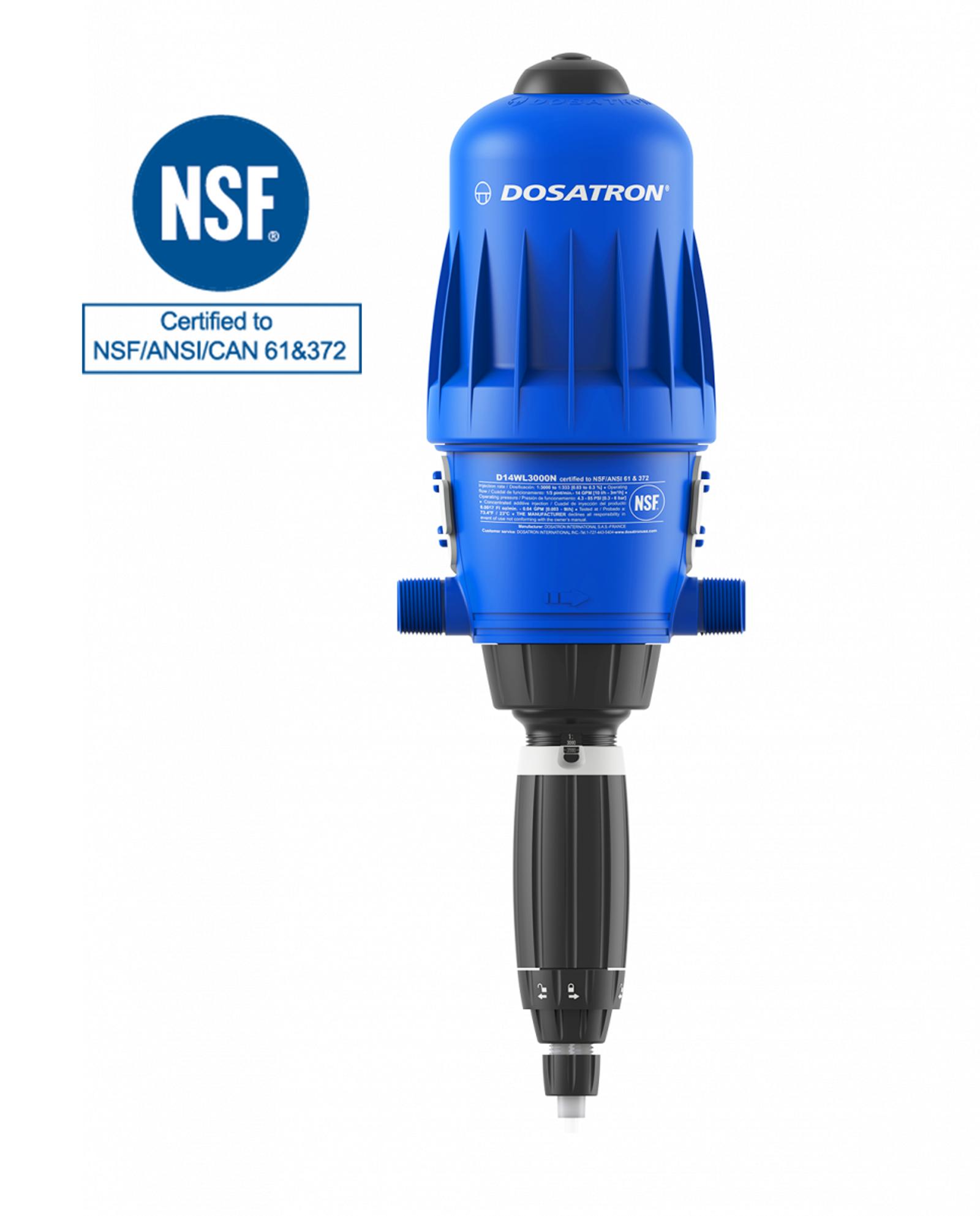
Continuous chlorination is the most affordable, most reliable line of defense a well system has ever had — and a Dosatron water-powered chlorinator is the simplest way to deploy it. NSF 61 certified. No electricity. No controller. No drift. One unit handles both your daily protection and your emergency shock event.

Two Chlorination Protocols

Most well systems benefit from both protocols in sequence: shock chlorination to reset the system, followed by continuous low-dose chlorination to prevent recontamination.

Protocol

Target dose

When to use it

Duration

Continuous chlorination

0.2 – 1.0 ppm free residual at the tap

Daily defense against bacteria, iron bacteria, sulfur reducers and biofilm. Standard on any well with a history of coliform-positive results.

24/7, year-round

Shock chlorination

50 – 200 ppm total in the well casing & plumbing

After a new well is drilled, well-cap breach, flood, septic intrusion, plumbing repair — or to reset a fouled system before transitioning to continuous dosing.

8 – 24 hours, then flush

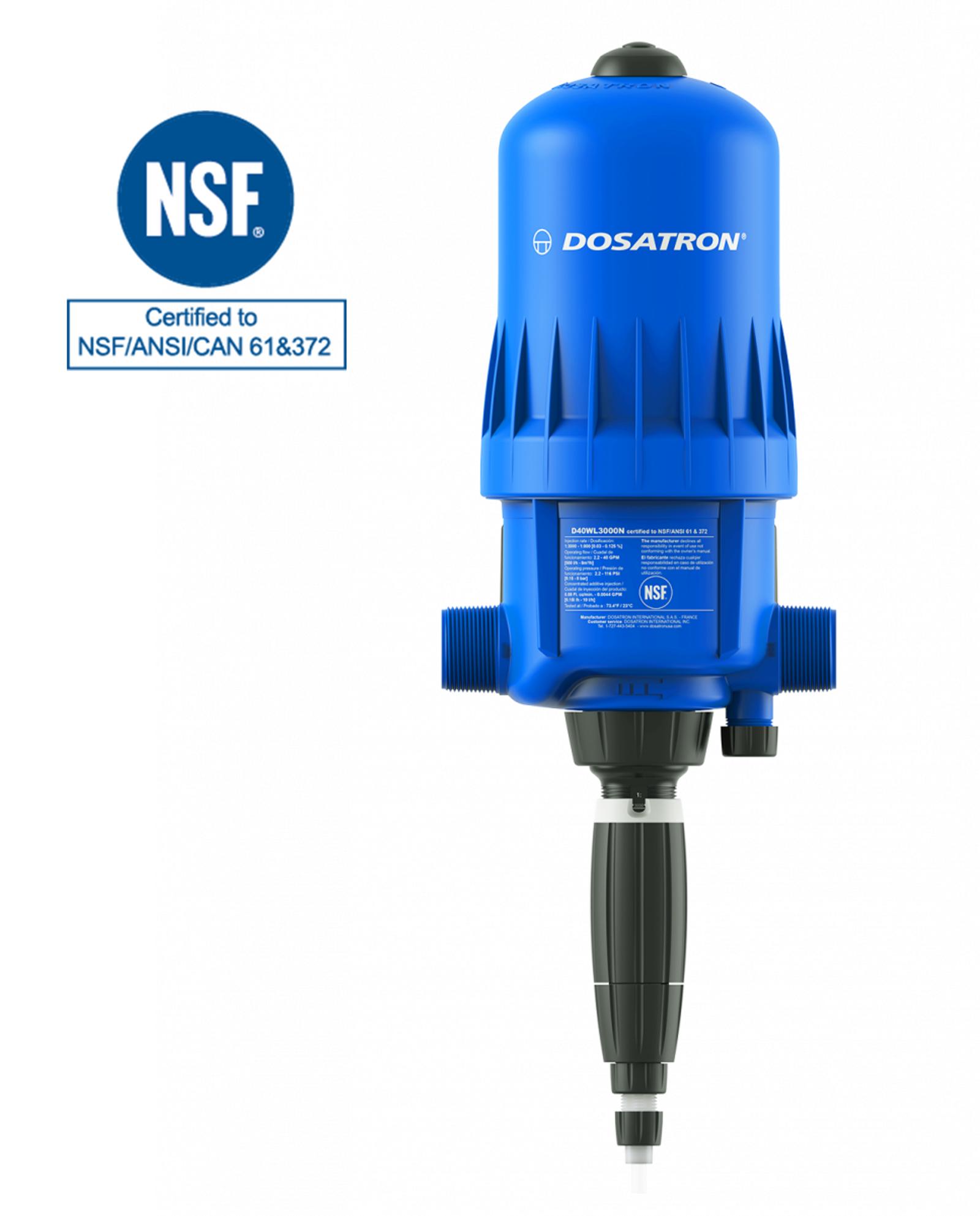
The same Dosatron D14WL (or D40WL for larger systems) runs both protocols — you simply change the stock-solution strength and the injection ratio.
Effective disinfection depends on two variables: the free chlorine residual in the water (Concentration) and the time that residual remains in contact with the water before consumption. The product of the two — CT value — is the foundation of regulatory disinfection rules throughout North America.

A high dose with insufficient contact time may fail to disinfect; a moderate dose with adequate contact time can meet or exceed regulatory targets. Correct sizing of the contact tank is therefore as important as setting the injection ratio. The # explains the calculation and provides a worked example for typical well-water installations.

A Dosatron chlorinator's proportional dosing ensures that the concentration delivered to the contact tank remains constant regardless of flow rate, maintaining a stable CT throughout daily demand cycles.

The Three Most Common Well-Water Problems

The combination of warm temperatures, dissolved minerals and intermittent flow creates ideal conditions for bacterial growth in private wells. Sulfur smell, iron staining and biofilm accumulation are the three indicators most frequently encountered, and chlorination is the only proven long-term control for all three.

Problem

Cause

Chlorination response

Iron bacteria

Gallionella, Leptothrix and Crenothrix species oxidize dissolved iron and form red/orange slime that fouls fixtures and downstream equipment

Continuous 0.5 – 1.0 ppm free residual; periodic shock at 100 – 200 ppm for heavily fouled wells

Sulfur odor (H₂S)

Sulfur-reducing bacteria (Desulfovibrio) producing hydrogen sulfide gas

Continuous 0.5 – 1.0 ppm; chlorine oxidizes H₂S to insoluble sulfur, which is removed downstream by a 5 µm sediment filter

Biofilm in plumbing

Mixed bacterial communities anchored to pipe walls, fittings and fixtures

Shock chlorination of the full plumbing loop, followed by continuous low-dose maintenance

Coliform / E. coli positive

Surface infiltration, septic intrusion, well-cap breach

Immediate shock chlorination, retest after 7 days, then transition to continuous dosing

The standard approach is to use shock chlorination to reset a fouled or contaminated system, followed by continuous low-dose chlorination to maintain protection over time.

Recommended System Layout

A complete well-water chlorination installation comprises six stages. Sequence matters: chlorine must contact the water before filtration, and any carbon polish must be the final stage so it removes residual chlorine after disinfection has occurred.

Stage

Component

Function

1

Well pump → pressure tank

Provides raw water at stable pressure

2

Dosatron D14WL or D40WL + stock-solution tank

Delivers proportional chlorine injection on every flow event

3

Contact / retention tank, sized for CT compliance

Ensures regulatory contact time before any consumption point

4

Sediment filter (5 µm typical)

Removes oxidized iron, sulfur particulates and debris

5

Activated carbon filter (optional)

Polishes taste and odor by removing residual chlorine

6

Distribution to taps and appliances

Delivers safe water to every fixture

Well Water Chlorination installation

Selecting the right range

Choose the D14WL Low-Flow Chlorinator if your peak well-pump output is below 14 GPM (most residential and small lodge installations). Choose the D40WL High-Flow Chlorinator if you serve a rural water cooperative, multi-family system, school or commercial property up to 40 GPM.

Chlorine Source — Sodium or Calcium Hypochlorite

Both chlorine sources are NSF-compatible and both operate with Dosatron chlorinators. Selection depends on operating context.

The Shock Chlorination Procedure

The following sequence is the standard protocol for shock chlorination of a contaminated or fouled private well. The laboratory results obtained at step 1 and step 8 are what confirm disinfection success.

  1. Collect a water sample and submit for coliform / E. coli analysis. Wait for results before defining the target dose.
  2. Calculate the required stock-solution volume using the #.
  3. Isolate the well from the home plumbing system or advise occupants to avoid all water use during the 8 – 24 hour contact period.
  4. Introduce the calculated chlorine solution into the well casing.
  5. Circulate the chlorinated water through the plumbing by opening each tap — outdoor first, then indoor — until a chlorine odor is detected.
  6. Maintain the contact time as prescribed, typically overnight.
  7. Flush all taps until the chlorine odor is no longer detectable, starting with outdoor taps to limit septic system loading.
  8. Retest for coliform 7 days after flushing to confirm disinfection.
  9. Transition to continuous dosing at 0.5 – 1.0 ppm free residual to prevent recontamination.

Beyond the Well

Dosatron addresses chlorination at the point of use: the well-head, the service entrance, the single home or small community system. Upstream of the household — at the municipal plant, the industrial process line, the controller-based dosing skid — the water-treatment challenge changes in scale, regulatory scope and engineering complexity.