
Botrytis in Cannabis: Identifying and Managing Bud Rot
Gray mold destroys buds from the inside out, often unnoticed until it's too late. Here's how to spot it, what causes it, and how to keep it out.
Botrytis cinerea — gray mold, or "bud rot" — is a destructive fungal pathogen that thrives on high humidity, low airflow and thick plant canopies. Studies from state universities identify it as one of the most common and harmful diseases in cannabis farming. Left unmanaged, it causes substantial crop losses.
The conditions Botrytis needs
Requirement | Detail |
Moisture | Needed for spores to germinate |
Plant tissue | Entry usually via wounds or natural openings |
Temperature | 59–77 °F (15–25 °C) |
Humidity | Above 60% RH |
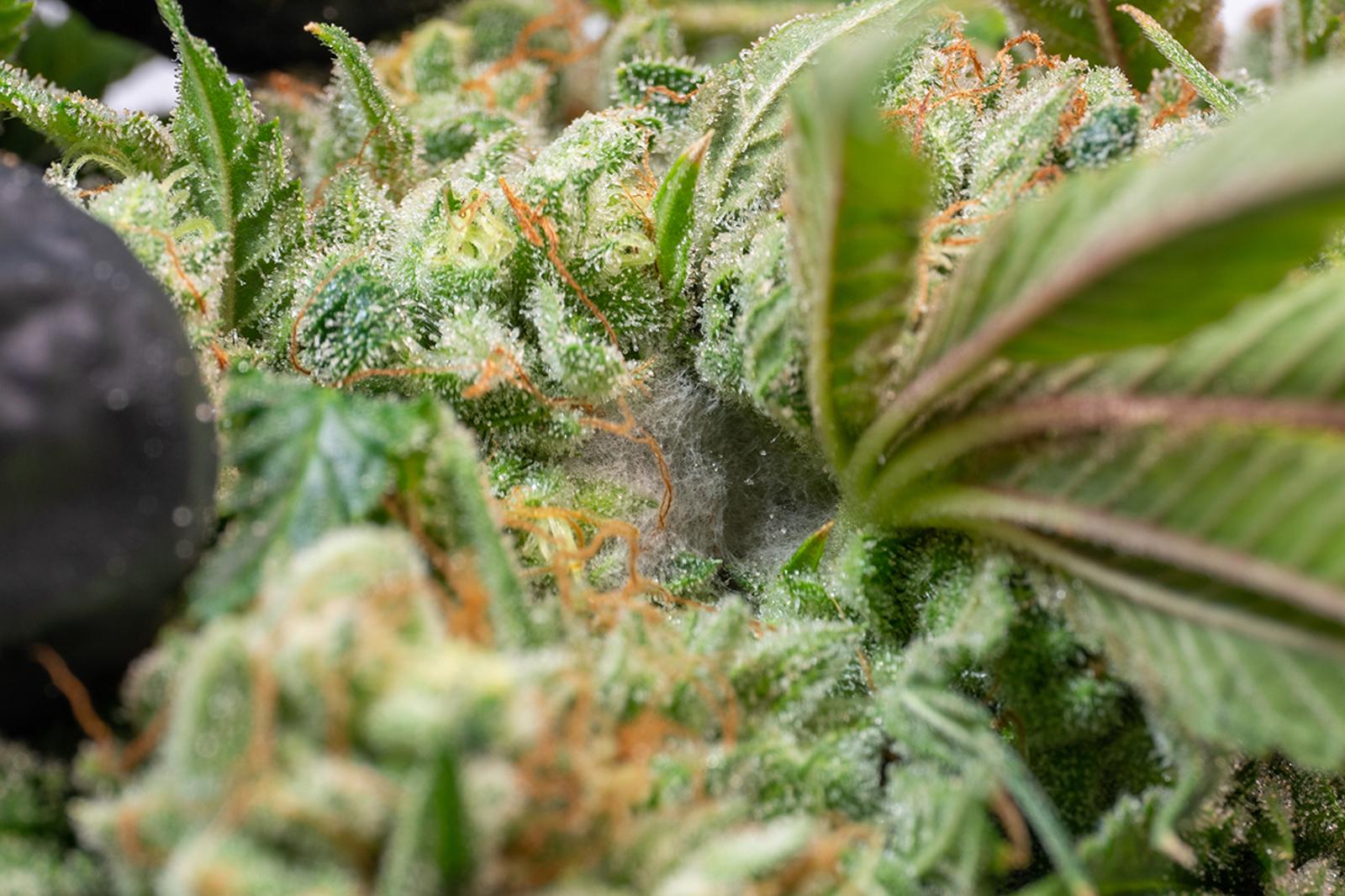
Recognizing Botrytis in cannabis
Stage | What you'll see |
Early | Small, water-soaked spots on leaves, stems or buds |
Progress | Fuzzy gray or brownish mold covering those areas |
Advanced | Necrosis — parts of the plant turning brown or black and dying off |
The critical problem: bud rot makes flowers decay from the inside out, so it often goes unnoticed until extensive damage has occurred. Inspect crops regularly, and pay particular attention to dense canopies.
What causes bud rot?
# | Cause | Why it matters |
1 | High humidity | Above 60% RH, spores germinate and spread readily. Dense buds trap humidity internally, creating microclimates with high moisture and limited air circulation |
2 | Poor airflow | Stagnant air in grow rooms, greenhouses or outdoors traps moisture in the canopy. Overcrowding makes it worse by limiting airflow between plants |
3 | Cool, damp conditions | Cool temperatures plus dampness raise fungal risk. Morning dew, fog or rain settling on plants during flowering is a common trigger — outdoor growers in wet or coastal climates are especially vulnerable |
4 | Plant stress or weakness | Nutrient deficiencies, over- or underwatering, and physical damage all increase susceptibility. Tissue damaged by pruning, pests or mechanical injury becomes an entry point for spores |
5 | Overcrowded canopies | Dense foliage traps humidity and blocks light from lower branches and buds — a dark, moist environment ideal for Botrytis. Improper pruning or skipping training techniques like SCROG compounds it |
6 | Inadequate sanitation | Spores linger on tools, in grow spaces and in the air. Poor hygiene and cross-contamination when handling infected and healthy plants spreads infection fast |
7 | Overwatering or poor drainage | Wet soil keeps roots damp and raises humidity around the plant. Excess water also weakens plants, increasing vulnerability |
8 | Late flowering | Dense buds and sticky trichomes trap moisture. Plants near harvest are more vulnerable, and may be stressed from channeling energy into flower production |
Spores land, germinate in moisture, and feed on plant tissue — usually entering through wounds or natural openings at 59–77 °F. The fungus begins inside the bud and spreads outward, typically unseen until damage is severe. Infected tissue then darkens, dries, crumbles, and releases more spores to infect nearby plants. Understanding these causes lets you adjust environmental controls, spacing and sanitation to lower risk across the whole crop.
8 prevention tips
Tip | What to do |
Optimize plant spacing | Proper spacing improves airflow and reduces canopy humidity — a simple change that removes the conditions Botrytis needs |
Control humidity and temperature | Use dehumidifiers and fans. Keeping RH below 50% through flowering significantly reduces gray mold risk |
Prune and train | Regularly prune lower branches and excess foliage to improve air circulation and light penetration. SCROG and LST produce a more open canopy |
Sanitize tools | Sterilize between uses to prevent carrying Botrytis cinerea from infected plants to healthy ones |
Inspect regularly | Routine inspections — especially during high humidity or after rainfall — enable early detection and targeted removal before spread |
Choose resistant strains | Some cannabis strains are naturally more resistant. State university agricultural extensions can guide variety selection |
Use biocontrol agents | Beneficial microbes such as Trichoderma or Bacillus subtilis compete with Botrytis for resources and space on plant surfaces |
Ensure proper drainage | Adequate drainage in your medium and pots prevents waterlogging, excess humidity and favourable fungal conditions |
Additional tools for managing Botrytis
Tool | Role |
Dehumidifiers | Hold RH below 50% through flowering — monitoring and controlling humidity is central to prevention |
Oscillating fans | Positioned strategically, they move air through the canopy and prevent the moisture buildup fungi need |
Hygrometers and sens | Digital hygrometers or environmental sensors track humidity and temperature in real time, flagging problem areas before they become outbreaks |
UV-C light | As part of an integrated pest management (IPM) plan, UV-C disrupts fungal spores and can significantly reduce gray mold spread |
Biological fungicides | Trichoderma and Bacillus subtilis compete with Botrytis cinerea and limit its ability to establish colonies |
How Dosatron pumps help combat Botrytis
Dosatron pumps don't kill Botrytis directly. What they do is deliver the nutrients and treatments that protect plants — consistently, across every plant in the system.
Role | How it works |
Delivering vital nutrients | Healthy plants resist infection better. Precise delivery of calcium, silica and potassium strengthens plant tissue, making it harder for fungal pathogens to penetrate |
Applying preventative treatments | Mixes and distributes hydrogen peroxide solutions, beneficial microbes or fungicides, creating an environment that inhibits fungal growth |
Disinfecting irrigation systems | Gray mold spores travel through irrigation water. Dosing sanitizing agents such as chlorine or peracetic acid into the lines keeps your water supply clean and disease-free |
Consistent application | Precision means every plant receives the same treatment or nutrient dose — no inconsistencies leaving individual plants vulnerable |
Reach out to us