
Industries
Animal Health
Car Wash
Data Centers & Mission-Critical Cooling
Food Safety & Sanitation
Irrigation
Hemp
Mining & Aggregates
Nutrient Delivery System
Water Treatment
Metal Processing
Printing
Products
D07
Hobby Cultivator
D128
D25
DM11 (Diaphragm)
D14
D6
D40
D20
D132
D400
Carts
Installation-Ready Systems
Venturi
Discontinued Products

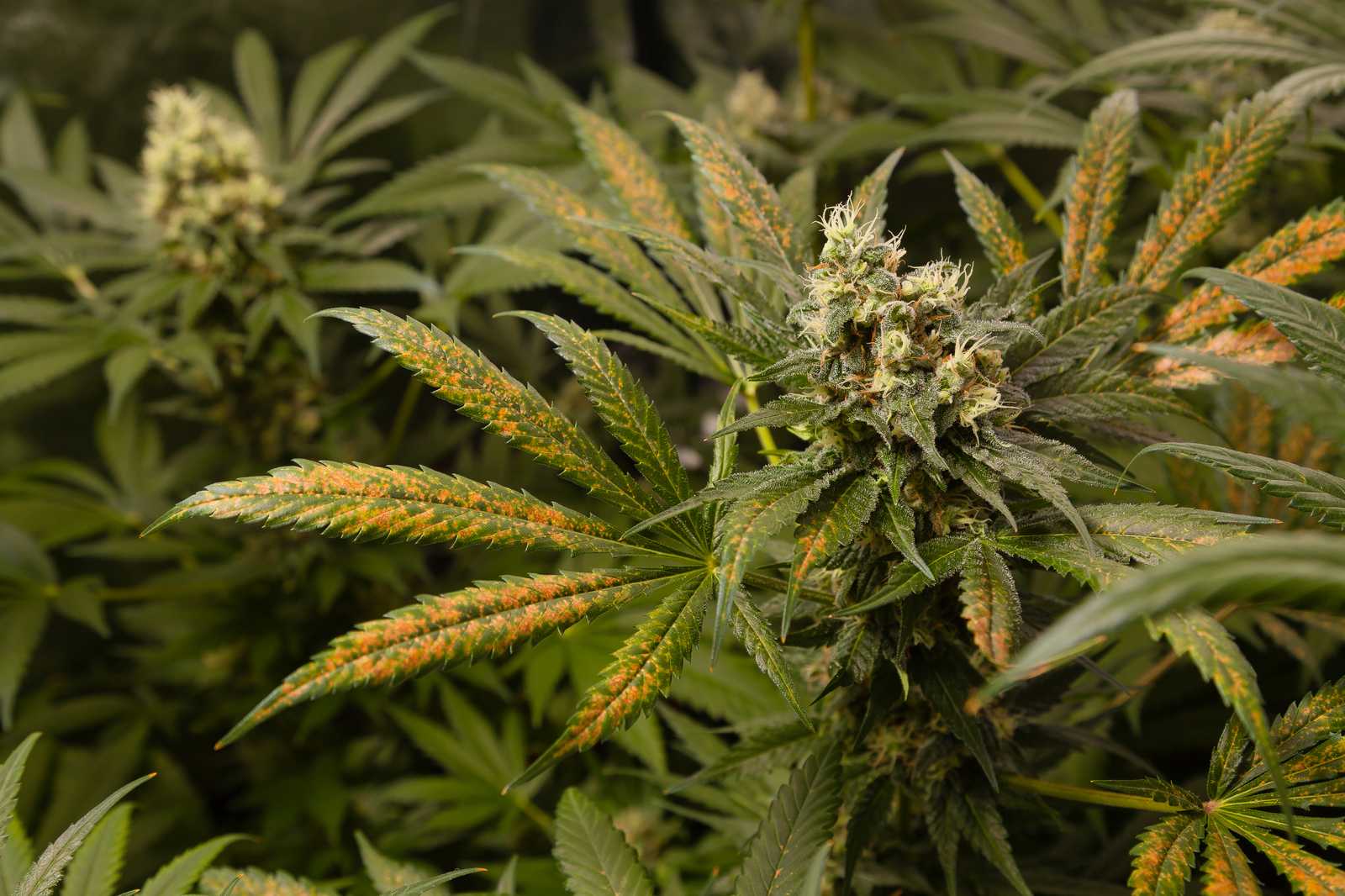
Yellow, spotted or curling leaves are the plant telling you something is wrong — but many deficiencies look alike, and the wrong fix can create a second problem. This chart helps you narrow it down in three questions: where the symptom started, what it looks like, and what your pH says. In most grows, the real cause is not a missing nutrient but a nutrient the plant can't take up: pH drift, inconsistent dosing, cold or waterlogged roots, or one element blocking another. 

Step 1: Where did the symptoms start?

This is the fastest way to narrow the list. Mobile nutrients can be moved by the plant from old leaves to new growth, so shortages show at the bottom first. Immobile nutrients stay where they were laid down, so shortages show at the top first. 

Where symptoms appear first 

Nutrient mobility 

Likely deficiencies 

Older, lower leaves 

Mobile 

Nitrogen, phosphorus, potassium, magnesium 

New growth and upper leaves 

Immobile or limited mobility 

Calcium, iron, zinc, manganese, boron 


Step 2: The cannabis nutrient deficiency chart

Nutrient 

Where it starts 

Key visual signs 

Peak demand 

Ideal pH (soil / hydro & coco) 

Most common causes 

Often confused with 

Nitrogen (N) 

Older, lower leaves 

Uniform pale green to yellow leaves, veins included; leaves drop from the bottom 

Vegetative stage 

6.0–7.0 / 5.5–6.5 

Underfeeding in veg, pH drift, overwatering, root-bound plants 

Normal late-flower fade, magnesium deficiency 

Phosphorus (P) 

Older, lower leaves 

Dark blue-green leaves, purple stems and petioles, bronze or brown blotches 

Transition to flower, early bulking 

6.2–7.0 / 5.5–6.2 

pH lockout, low P in bloom feed, cold root zone, hard water 

Natural purple genetics, cold stress 

Potassium (K) 

Older and middle leaves 

Yellow-to-brown burnt leaf edges moving inward, rusty margin spots, upward curl 

Mid-flower to bulking 

6.0–7.0 / 5.5–6.5 

pH, low K in flower, excess Ca/Mg/Na, salt buildup, heat 

Nutrient burn, heat/light stress 

Magnesium (Mg) 

Older and middle leaves 

Yellowing between green veins, rust or purple spots, brittle upward-curling leaves 

Mid-to-late flower 

6.0–7.0 / 5.5–6.5 

RO or soft water, unbuffered coco, excess K or Ca, low pH 

Nitrogen deficiency, potassium deficiency 

Calcium (Ca) 

New growth, upper leaves 

Brown or bronze spots with defined edges, twisted or crinkled new leaves, weak stems 

Fast veg and early flower 

6.2–7.0 / 5.8–6.2 

RO water, unbuffered coco, excess K/Mg/NH4, high humidity 

Magnesium deficiency, pest damage, pH swings 

Iron (Fe) 

Newest leaves at the top 

Pale yellow new leaves with green veins; whitish tops in severe cases 

All stages 

6.0–6.5 / 5.5–6.0 

pH too high (main cause), overwatering, hard alkaline water 

Magnesium (older leaves), manganese 

Zinc (Zn) 

New growth 

Yellowing between veins on small, narrow, twisted new leaves; very short internodes 

Veg and early flower 

6.0–6.5 / 5.5–6.2 

High pH, excess phosphorus from bloom boosters 

Iron or manganese deficiency 

Manganese (Mn) 

Young and middle leaves 

Mottled yellowing between green veins, scattered brown or tan spots 

All stages 

6.0–6.5 / 5.5–6.2 

High pH, excess iron, poor root health 

Iron deficiency, low-pH Mn toxicity 

Boron (B) 

Growing tips, new growth 

Thick, brittle, distorted new leaves; tips that brown and die; hollow stems 

Fast growth and flowering 

6.0–6.5 / 5.5–6.2 

Low transpiration (high humidity), high pH, RO water, leaching 

Calcium deficiency, heat stress, pests 


Note: pH targets are general growing guidance for mineral nutrient programs. Always follow your nutrient manufacturer's recommendations and confirm with a leaf tissue or water test when in doubt. 

Step 3: Rule out the look-alikes

Before adding any supplement, check that the symptom is not caused by something else. These are the most common misdiagnoses: 

Look-alike 

What it looks like 

How to tell the difference 

Nutrient burn (overfeeding) 

Brown, crispy tips only, often with dark green leaves 

Only the very tips are affected; runoff EC is higher than input EC 

pH fluctuation 

Mixed symptoms from several "deficiencies" at once 

Several nutrients appear short at the same time; pH at input or runoff is outside range 

Light or heat stress 

Bleached or yellow tops closest to the lamp, upward-curling "tacoing" leaves 

Symptoms limited to the top of the canopy, directly under the light 

Overwatering 

Droopy, swollen leaves, slow growth, general yellowing 

Media stays wet; plants recover once dry-back is restored 

Natural late-flower fade 

Gradual yellowing of fan leaves in the final weeks 

Happens near harvest, buds keep ripening normally 

Genetic purpling 

Purple stems, leaves or buds 

Healthy leaf color and normal growth; common with cool nights 

Step 4: Fix the cause, not just the symptom

  1. Check pH and EC at input and runoff (or in the reservoir for hydro). It is the root cause in most cases.
  2. If runoff EC is much higher than input, or pH is far off, flush with pH-adjusted water and restart at the right concentration.
  3. Check your source water. RO and soft water need Cal-Mag; hard, alkaline water may need acid injection.
  4. Correct the feed for the growth stage: more nitrogen in veg, more phosphorus and potassium in flower — without overdoing boosters.
  5. Fix the root zone: proper dry-back, good drainage, and root-zone temperature around 65–75°F (18–24°C).
  6. Judge success on new growth. Damaged leaves rarely recover; healthy new leaves within one to two weeks mean the fix worked.

Too much is a problem too

Overcorrecting is one of the most common mistakes. Many nutrients compete for uptake, so pushing one can lock out another: 

Excess of… 

Can cause a deficiency in… 

Potassium (K) 

Calcium, magnesium 

Phosphorus (P) 

Zinc, iron, calcium 

Calcium (Ca) 

Magnesium, potassium, boron 

Iron (Fe) 

Manganese, zinc 

Zinc (Zn) 

Iron 

Nitrogen (N) 

Delayed ripening, leafy buds and "the claw" (dark, downward-curling leaf tips) 

Boron (B) / Manganese (Mn) 

Direct toxicity — boron has a very narrow safe range; manganese becomes toxic when pH runs too low 


Why consistent dosing prevents most deficiencies

Most deficiencies come from a nutrient solution that drifts: a stock tank mixed by hand, a feed that changes with water pressure, or incompatible fertilizers mixed in one concentrate. Dosatron water-powered proportional pumps inject concentrated nutrients, Cal-Mag, micronutrients and pH adjusters directly into the irrigation line at a constant ratio, whatever the flow or pressure. Every plant gets the same feed, from the first bench to the last. Installing units in series lets you keep calcium separate from phosphates and sulfates, dose micronutrients in tiny, stable amounts, and adjust the feed for veg or flower in seconds — with no electricity required. 

Want to know more about the right dosing setup for your cannabis operation.