
How to Control pH in Hydroponics?
What is pH in Hydroponics?
Managing the pH in hydroponics is essential for growing healthy plants. Since hydroponic systems deliver nutrients through water, the pH level of the nutrient solution affects how well plants absorb essential minerals. Even if you have the right amount of hydroponic nutrient, plants can suffer if the pH is outside the desired range.
This guide explains everything you need to know about how to control pH in hydroponics and ensure your plants thrive.
What is pH in Hydroponics?
pH measures how acidic or alkaline a solution is, with a scale ranging from 0 to 14. A pH level of 7 is neutral, numbers below 7 are acidic, and numbers above 7 are alkaline.
For most plants grown in hydroponic systems, the ideal pH range is 5.5 to 6.5. Staying within this range ensures plants get the nutrients they need.
If the pH falls outside the desired pH range, certain minerals can become unavailable, causing nutrient deficiencies or nutrient lockout.
For example:
- Iron and zinc become harder to absorb when the pH is above 6.5.
- Calcium and magnesium become unavailable in acidic conditions with a pH below 5.5.
By keeping the pH level balanced, growers ensure the best nutrient uptake and plant health, which is crucial for growing plants successfully in a hydroponic system.
Why pH Fluctuations Are a Problem?
In hydroponics, small pH fluctuations can lead to poor nutrient absorption. These fluctuations are caused by changes in water chemistry, nutrient uptake by plants, and environmental factors.
Over time, these shifts can reduce crop yields or cause symptoms like yellowing leaves and stunted growth. Monitoring and adjusting the pH regularly prevents these issues and keeps plants growing strong.
How to Measure pH in Hydroponic Systems?
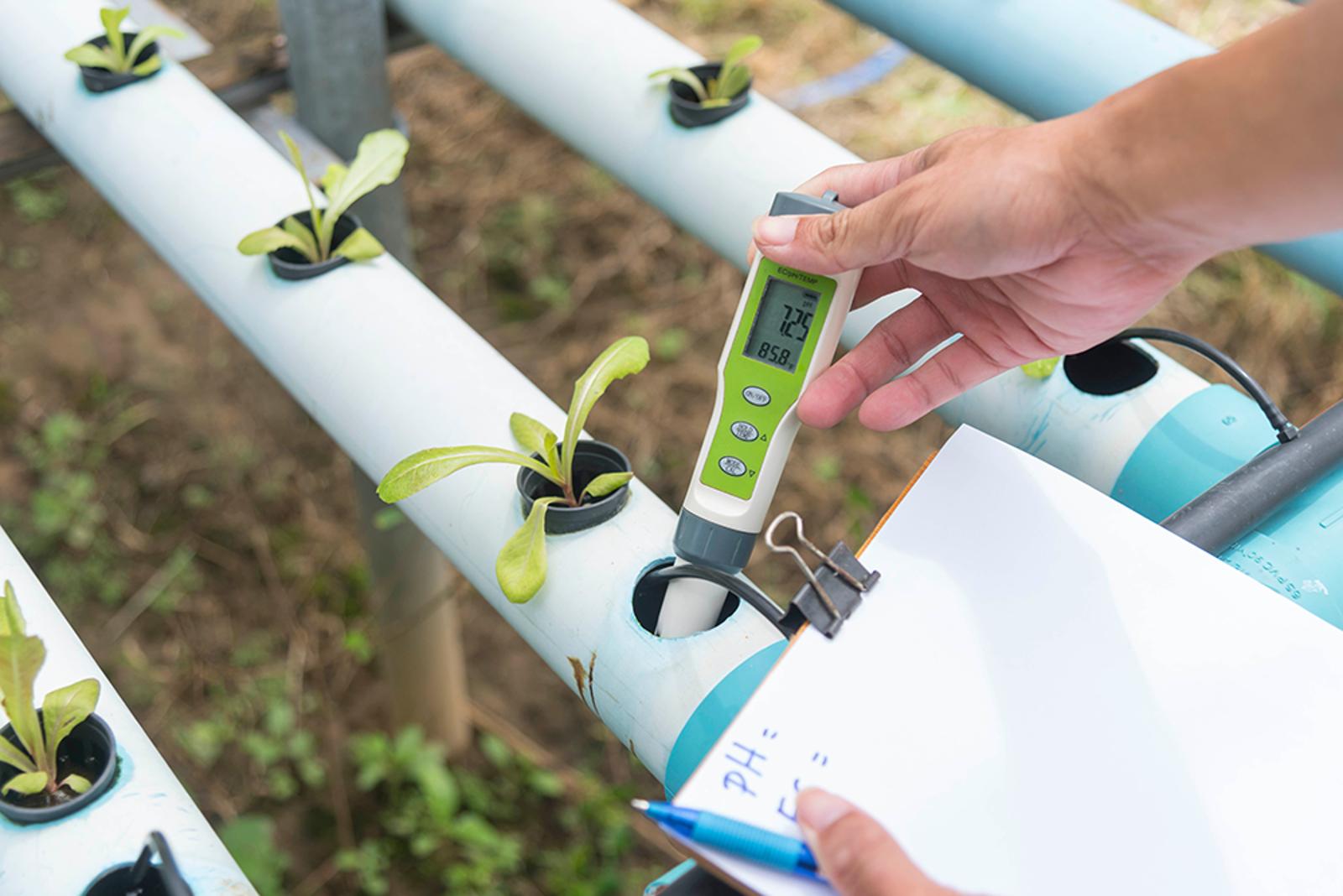
Accurate measurement of pH is the first step in controlling it.
Here’s how to do it:
- Use a pH Meter: A reliable and easy-to-use tool for accurate readings.
- Calibrate Your Meter: Regular calibration with a solution ensures accuracy.
- Take a Sample: Collect a small sample of the nutrient solution for testing.
- Submerge the Probe: Place the pH meter’s probe into the sample and wait for the reading to stabilize.
- Record the pH Level: Keep a log of readings to track any changes or trends in pH.
Regular pH measurements ensure the hydroponic nutrient solution stays balanced and helps avoid issues with nutrient availability.
How to Adjust the pH in Hydroponic Systems?
If the pH level drifts outside the ideal range, you need to adjust the pH promptly.
Here are the two main ways to correct pH levels:
Lowering the pH
If your solution is too alkaline (pH above 6.5), you’ll need to use a pH down solution to bring it back to the desired range. Most pH down solutions contain phosphoric acid or citric acid.
- Dilute the Solution: Always dilute the pH down product in water to avoid sudden changes.
- Add Slowly: Make small adjustments, testing the pH after each addition.
- Monitor Daily: pH may drift over time, so monitor it regularly to ensure the growing plants receive the optimal nutrient balance.
Increasing the pH
If the nutrient solution becomes too acidic (below 5.5), you’ll need to raise the pH using pH up solution, which contain potassium hydroxide or sodium hydroxide.
- Dilute the pH Up Solution: This prevents pH from rising too quickly.
- Add in Small Increments: Add slowly and retest until the solution reaches the desired range.
- Recheck the Solution Daily: pH fluctuations may require frequent adjustments to stay balanced, ensuring the hydroponic nutrient solution remains effective.
Optimal pH Ranges for Popular Hydroponic Crops
Each crop has unique pH needs. Staying within the correct pH range ensures your plants get the nutrients they need without any issues.
Here are some common crops and their ideal pH ranges:
- Leafy Greens (Lettuce, Spinach): 5.5 – 6.0
- Herbs (Basil, Mint): 5.8 – 6.2
- Tomatoes and Peppers: 5.5 – 6.5
- Strawberries: 5.8 – 6.2
- Cucumbers and Zucchini: 5.5 – 6.0
Knowing the ideal pH range for your plants helps you avoid problems like nutrient lockout and maximizes nutrient uptake for healthier, faster-growing plants.
Common pH Issues in Hydroponic Systems and Solutions
pH Drift
Nutrient solutions tend to drift in pH over time as plants take up water and nutrients. pH fluctuations are common in systems with large temperature swings or high evaporation rates.
Solution:
- Test pH daily to catch any changes early.
- Adjust the pH using pH up and pH down solutions as needed.
Algae Growth
Algae can raise the pH by consuming nutrients and competing with your plants.
Solution:
- Keep your hydroponic garden reservoirs covered to block light.
- Use hydrogen peroxide or algae-control solutions if algae develop.
Hard Water Problems
Hard water contains minerals that raise the pH over time, leading to imbalances in your hydroponic solutions.
Solution:
- Use distilled water or reverse osmosis (RO) water to reduce mineral content.
Monitor water quality regularly and adjust the pH accordingly to keep your growing plants healthy.
How Environmental Conditions Affect pH Levels?
Environmental factors like temperature and light intensity affect pH in hydroponic systems. Here’s how:
- High Temperatures: Cause faster evaporation, concentrating salts and affecting pH.
- Humidity Levels: Low humidity makes plants absorb more water, influencing nutrient uptake and pH.
- Lighting: Strong lights promote photosynthesis and can change the water chemistry, causing pH fluctuations.
Monitoring these factors helps you keep both pH and EC within the ideal range for growing plants.
How Dosatron Systems Simplify pH Control?
While precise pH adjustment in real time requires advanced systems with electric pumps like Etatron, as well as a controller or probe, Dosatron fertigation systems offer a reliable, low-maintenance solution for consistent nutrient delivery. Once your nutrient blend is dialed in, Dosatron can be set to adjust pH up or down, ensuring that each application is repeatable, reducing the need for constant recalibration or adjustments.
Benefits of Dosatron Systems
- Consistent Nutrient Delivery: Dosatron provides repeatable results, ensuring your crops receive the right blend every time.
- Reliable pH Stability: While not designed for automatic pH adjustment, Dosatron provides dependable performance by maintaining consistent delivery and minimizing fluctuations over time.
- Repeatable Nutrient Programs: After setting your custom blend, the system delivers the same precise ratios with each use, reducing guesswork and manual intervention.
- Reduced Waste and Maintenance: Automating the process ensures consistent nutrient application, minimizing the risk of overusing acid or caustic solutions. Since Dosatron focuses on reliability and repeatability, it requires less maintenance than systems dependent on probes and frequent calibration.
By streamlining nutrient delivery and reducing the need for frequent pH adjustments, Dosatron helps growers achieve reliable, predictable results with less effort and fewer variables to manage.
Best Practices for Long-Term pH Management
- Use Clean Water: Start with distilled water or RO water to avoid pH swings.
- Monitor pH Daily: Frequent testing ensures you catch issues early.
- Flush the System Regularly: Flushing removes old nutrients and stabilizes pH.
- Keep a pH Log: Track readings over time to identify patterns.
- Automate Dosing: Using Dosatron systems ensures precise pH control.
Take Control of pH with Dosatron Systems
Managing pH in hydroponics is essential for healthy plants and strong yields. Small changes in pH can lead to nutrient lockout or deficiencies, so it’s important to monitor and adjust pH levels regularly. Dosatron’s fertigation systems make pH control easy by adjusting up or down and helping to ensure consistent nutrient delivery.
Whether you manage a small hydroponic setup or a large commercial operation, Dosatron provides the tools you need to maintain ideal pH levels, optimize nutrient uptake, and grow healthy, thriving plants with minimal effort.
Reach out to us